|
COOKIES SETTINGS |
Accept all cookies Personalise |
| Accept selected cookies |

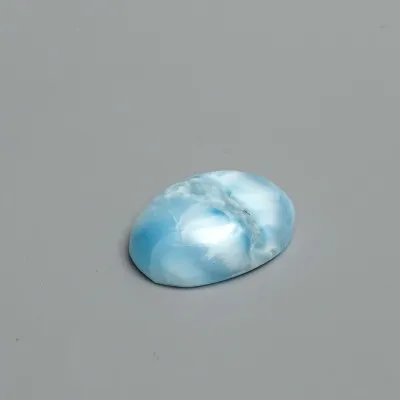
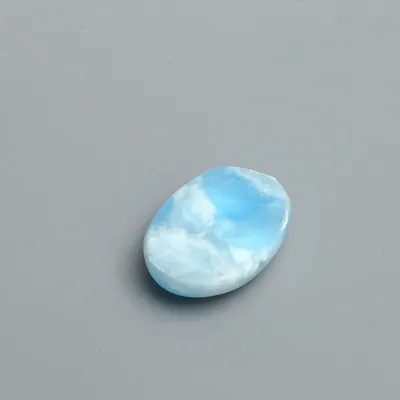
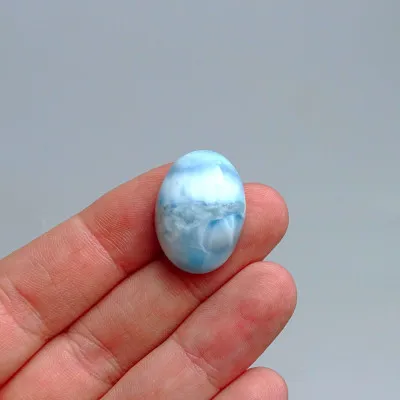
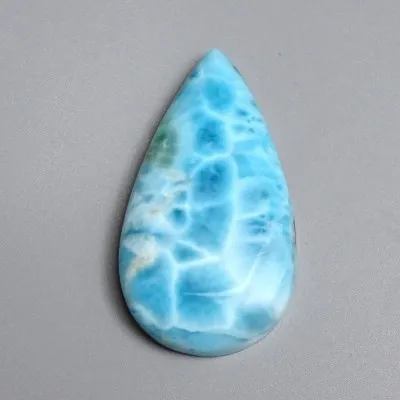
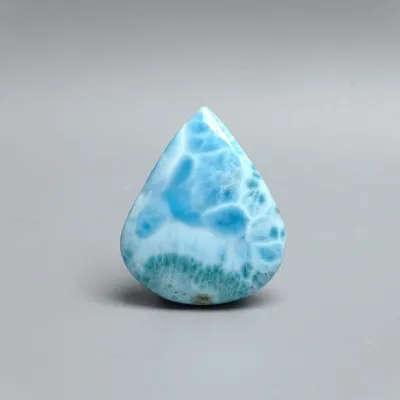
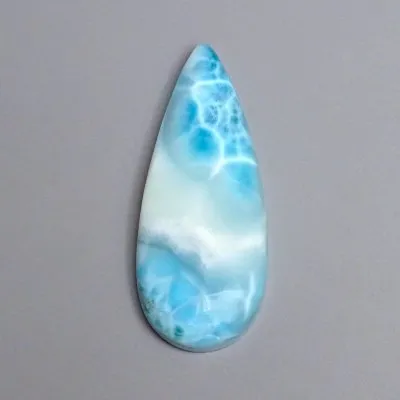
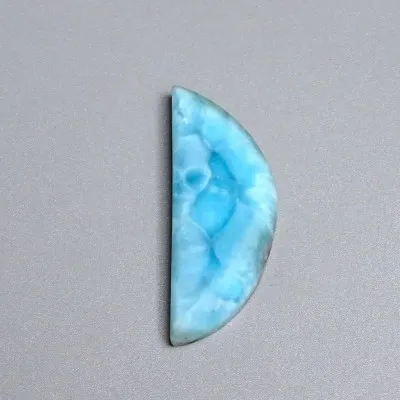
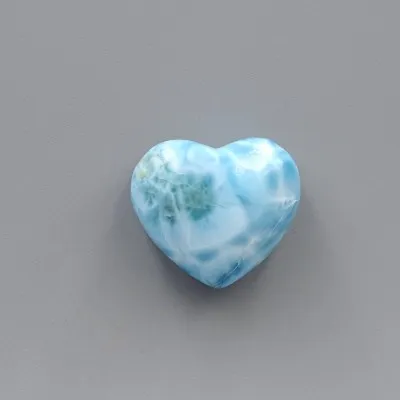
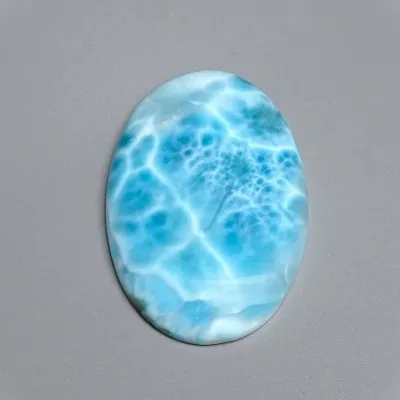
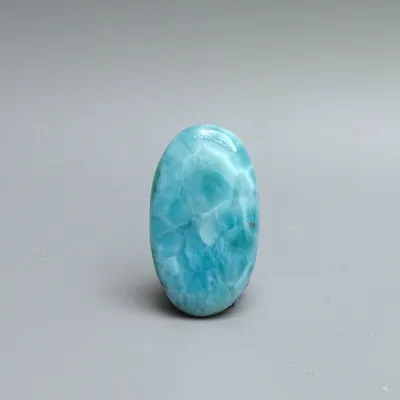
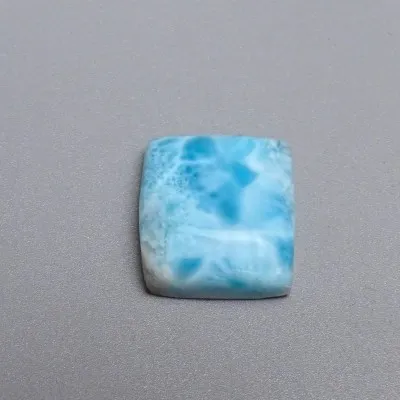
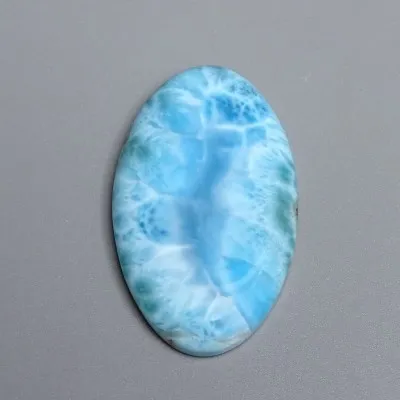
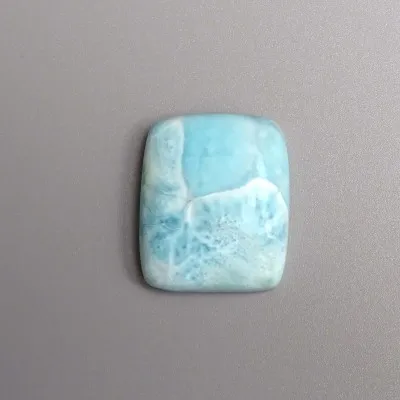
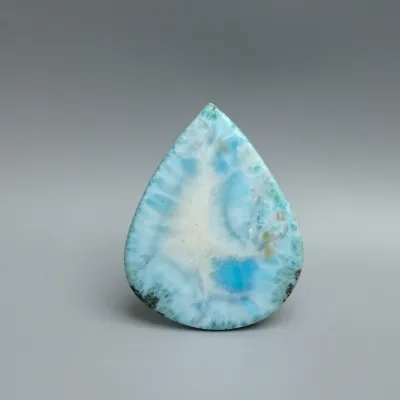
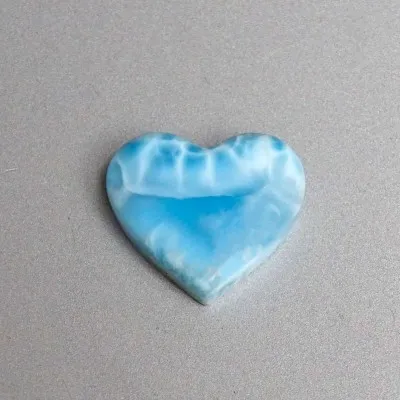
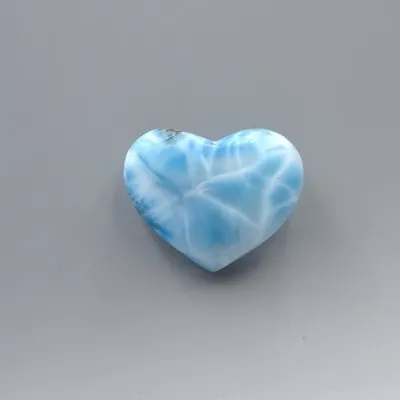
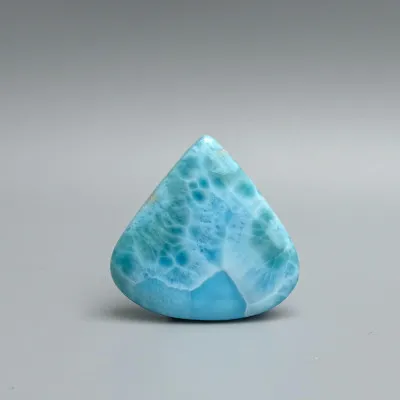
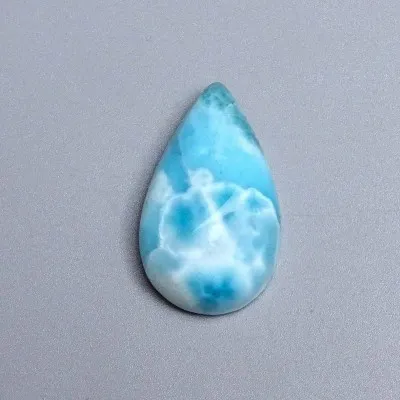
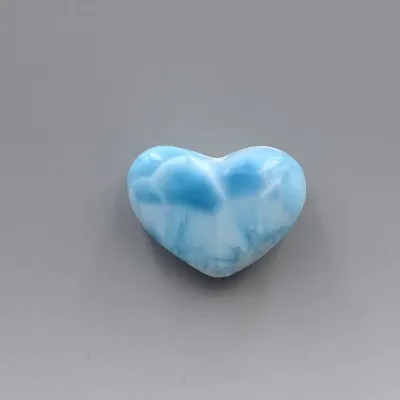
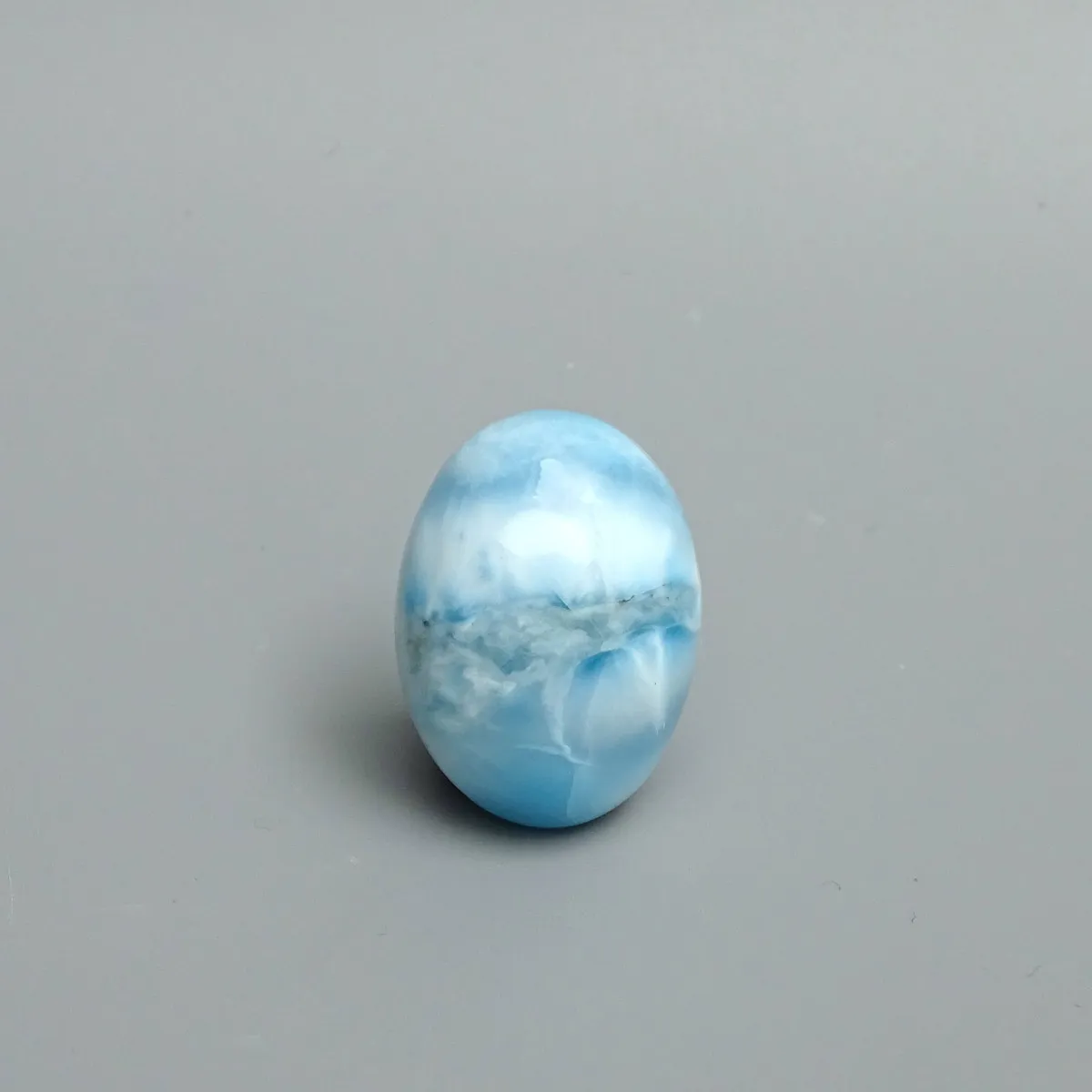
Larimar natural polished large cabochon in top quality, natural suitable for making luxury jewelry. Larimar is a rare type of blue pectolite, which is found only in one place in the world in the Dominican Republic. This beautiful mineral is known for its blue and blue-green hue, and the color can be light to dark blue. This is a natural stone, so there may occasionally be small natural imperfections on the surface, which are a common part of an authentic mineral.
Weight: 5.4 g
Dimensions: 2.34 x 1.70 x 0.78 cm
Country of origin: Dominican Republic, locality: Bahoruco
You always buy the natural mineral shown in the photo!
MINERALS-STONES® • Larimar • Dominican Republic
Larimar is a rare blue variety of the mineral pectolite, known for its delicate turquoise-blue, sky-blue to blue-green color and patterns reminiscent of the sea surface, clouds or a tropical lagoon. It belongs to the best-known locality-restricted stones in the world, because high-quality larimar is commercially associated almost exclusively with the Dominican Republic, especially the Barahona region and the Los Chupaderos deposit.
Larimar is a gemstone-quality to decorative blue variety of pectolite, a sodium-calcium silicate with a hydroxyl group. The basic chemical formula of pectolite is given as NaCa2Si3O8(OH). While common pectolite is usually white, grey or visually modest, larimar is exceptional for its blue to blue-green color, which is associated with specific geological formation conditions and trace elements, especially copper.
The most beautiful larimar pieces show a light blue to more saturated turquoise-blue color, a fine white pattern and a natural structure resembling water surfaces, clouds, ice-like textures or sea foam. This natural pattern makes every piece unique. Larimar does not behave like a classic transparent gemstone with strong brilliance; instead, it is an exceptionally aesthetic natural stone with soft color, a calm appearance and a strong locality identity.
In the MINERALS-STONES® selection, you can also find polished larimar cabochons and freeform pieces suitable for collecting, decoration and jewelry use. Polished cabochons enhance the typical light blue to turquoise coloration, white cloud-like structures, subtle transitions and natural pattern that are highly characteristic of quality larimar.
Larimar is sought after not only for its beauty, but also for its story. It is a stone with an exceptionally limited origin that has become a symbol of the Caribbean, the Dominican Republic and natural blue elegance. Every piece differs in shade, pattern, compactness, translucency, shape and overall character.
Larimar is commercially connected almost exclusively with the Dominican Republic. The best-known deposit is located in the Barahona region near Los Chupaderos.
Typical structures include blue, turquoise, white and blue-green patterns that resemble the sea surface, clouds or a Caribbean lagoon.
Polished cabochons beautifully enhance the color, pattern and soft luster of larimar. They are suitable for pendants, rings, earrings and artisan jewelry.
Larimar is one of the best-known examples of a stone with an exceptionally limited locality. Its main and commercially significant occurrence is connected with the Dominican Republic, especially the southwestern part of the country in the Barahona region and the Los Chupaderos deposit. Most quality material used for cabochons, jewelry and collector stones comes from this area.
Geologically, larimar is associated with a volcanic environment. It formed in cavities and veins of rocks, where blue-colored pectolite developed under suitable conditions. Larimar mining is locality-limited, demanding and high-quality material is not evenly distributed within the rock. This is why fine compact larimar with pronounced blue color and aesthetic white pattern is increasingly sought after.
The origin of larimar is important not only for value, but also for the identity of the stone. Larimar is not a general name for any blue stone. It is a specific blue variety of pectolite, and its name is closely connected with the Dominican Republic and a Caribbean geological story.
| Parameter | Information |
|---|---|
| Name | Larimar |
| Mineral | Pectolite |
| Mineralogical classification | Silicate, sodium-calcium inosilicate with hydroxyl group |
| Chemical composition | NaCa2Si3O8(OH) |
| Color | Light blue, turquoise blue, blue-green, white-blue, sometimes greenish or with white patterning |
| Coloring component | The blue color is mainly associated with traces of copper and specific geological formation conditions |
| Luster | Vitreous to silky, with a softly waxy impression in polished pieces |
| Transparency | Translucent to opaque depending on quality and structure |
| Hardness | Approximately 4.5–5 on the Mohs scale |
| Locality | Dominican Republic, Barahona region, Los Chupaderos |
| Processing | Polished cabochons, freeforms, jewelry stones, decorative and collector pieces |
| Use | Jewelry, cabochons, pendants, rings, earrings, collection, decoration, gift stone |
Larimar is rare mainly because of its extremely limited origin. Unlike minerals that occur in many countries around the world, quality larimar is practically linked to one significant region. This gives it a clear locality-based identity and makes it an exceptional stone in terms of geographic origin.
The value of larimar is influenced primarily by the intensity of the blue color, compactness, polishing quality, size, pattern, overall aesthetics and suitability for jewelry use. The most desirable pieces usually have a clean light blue to turquoise-blue color, without overly distracting grey or brown areas, with attractive white patterning and good surface luster.
Larimar with a fine pattern reminiscent of the sea surface is especially popular for jewelry. Polished cabochons beautifully show its typical character: blue “islands”, white transitions, water-like structures and a natural Caribbean appearance.
Polished larimar cabochons are among the most beautiful ways to process this stone. The smooth rounded surface without facets allows the color, pattern and natural transitions to stand out. Unlike a faceted cut, larimar is not valued for sharp brilliance, but for soft luster, calm color and a picturesque natural pattern.
The cabochons in the selection show light turquoise-blue to sky-blue areas, white cloud-like patterning, subtle blue-green transitions and occasional small natural inclusions or remnants of host rock. These features are common in natural larimar and help confirm its authentic character.
Larimar cabochons are suitable for pendants, rings, earrings, brooches or handmade artisan jewelry. Due to its hardness of approximately 4.5–5 on the Mohs scale, a more protective setting is recommended, along with gentler handling than for harder gemstones such as sapphire, ruby or diamond.
Because of its popularity, larimar is often imitated or confused with other blue stones, dyed materials, glass, resins or composites. Genuine larimar has a specific combination of blue color, white pattern, pectolite structure and locality-based origin.
When choosing larimar, it is advisable to be cautious with overly uniform blue color, an unnaturally plastic appearance, suspiciously low price, missing origin information or photographs that do not show the exact piece. In natural larimar, color transitions, small inclusions, white structures and individual patterning are normal.
Transparent description is important. Larimar should be identified as pectolite from the Dominican Republic, not merely as a generic blue stone. For more valuable pieces, expert verification and credible origin may also be important.
Larimar is ideal for jewelry and decorative use. Thanks to its color, it combines beautifully with silver, white gold, yellow gold, pearls, rock crystal, moonstone and other light-colored minerals. In modern jewelry design, it is sought after for its soft, fresh and naturally luxurious appearance.
Polished larimar cabochons are especially suitable for pendants, earrings and rings with protective settings. Loose cabochons are appreciated by jewelers, designers, collectors and customers who want to own a specific natural stone before setting it into jewelry.
Larimar can also be used as a collector and decorative stone. It stands out beautifully in a display case, on a light background, beside sea-inspired decorations or in a collection of blue and turquoise minerals.
Larimar is a beautiful but more delicate stone. It has lower hardness than many classic gemstones, so it should be protected from drops, impacts, pressure, scratching, aggressive chemicals, ultrasonic cleaning and long-term exposure to strong sunlight.
For cleaning, use a soft cloth, or lukewarm water with a very mild soap solution if necessary. Dry the stone afterwards with a soft textile. Do not store larimar loosely together with harder stones, as they could damage its polished surface or the edges of the cabochon.
Larimar is a rare blue variety of the mineral pectolite. It is known for its turquoise-blue to blue-green color and white patterning reminiscent of the sea surface.
Larimar comes from the Dominican Republic, especially the Barahona region and the Los Chupaderos deposit. This locality is essential to larimar’s identity.
The rarity of larimar is related to its very limited occurrence. High-quality material is commercially associated almost exclusively with one significant region in the Dominican Republic.
Larimar is a blue variety of pectolite with the composition NaCa2Si3O8(OH). Its blue coloration is mainly associated with traces of copper.
Yes, especially as a polished cabochon for pendants, earrings, brooches or rings with protective settings. Due to its hardness of about 4.5–5 on the Mohs scale, more careful handling is required.
Cabochons are polished stones with a smooth rounded surface and no facets. In larimar, this shape beautifully emphasizes the blue color, white pattern and natural structure.
Fine larimar has a natural blue to turquoise color, good compactness, high-quality polish and aesthetic white patterning. Excessively grey, brown or strongly cracked areas may reduce its visual value.
Protect it from impacts, scratching, chemicals, ultrasonic cleaning and long-term strong sunlight. Clean it with a soft cloth or lukewarm water with very mild soap.
You always purchase the exact piece shown in the photograph. MINERALS-STONES® offers natural minerals, crystals, gemstones, collector pieces and jewelry stones with a focus on origin, real photographs, expert description and transparent information.
Larimar natural polished large cabochon in top quality, natural suitable for making luxury jewelry. Larimar is a rare type of blue pectolite, which is found only in one place in the world in the Dominican Republic. This beautiful mineral is known for its blue and blue-green hue, and the color can be light to dark blue. This is a natural stone, so there may occasionally be small natural imperfections on the surface, which are a common part of an authentic mineral.
Weight: 5.4 g
Dimensions: 2.34 x 1.70 x 0.78 cm
Country of origin: Dominican Republic, locality: Bahoruco
You always buy the natural mineral shown in the photo!