- There are no more items in your cart
- Shipping
- Total $0.00
- Beads made from natural minerals
- Exclusive collection crystals and minerals
- Investment gemstones – natural cut stones
- Alexandrite – a natural gemstone with variable color
- Amethyst – cut natural stones
- Ametrine – a mineral with a combination of purple and yellow colors
- Aquamarine – a natural beryl gemstone in shades of blue
- Chrysoberyl – a gemstone of yellow-green hues
- Citrine natural cut mineral
- Emerald – a natural green beryl gemstone
- Ethiopian opal – natural cut gemstone opal
- Garnet natural cut gemstone
- Heliodor (golden beryl) natural cut gemstone
- Kunzite
- Mix other cut stones
- Moonstone – a gemstone with a pearly sheen
- Morganite natural gemstone beryl
- Olivine (peridot)
- Ruby natural cut gemstone
- Sapphire - cut natural gemstones
- Blue sapphire – a gemstone from Sri Lanka
- Green sapphire – a gemstone from Sri Lanka
- Padparadscha sapphire – a rare gemstone from Sri Lanka
- Pink sapphire – a gemstone from Sri Lanka
- Star sapphire – a sapphire with a star on the surface
- White sapphire – a gemstone from Sri Lanka
- Yellow sapphire – a gemstone from Sri Lanka
- Sinhalite
- Smokyquartz
- Spinel natural cut gemstone
- Sunstone natural cut stone
- Tanzanite – a rare natural gemstone from Tanzania
- Topaz natural cut mineral
- Tourmaline natural cut gemstone
- Zircon – natural cut gemstones with high shine
- NATURAL MINERALS - GEMSTONES - CRYSTALS - DRUISES
- Afghanite - a rare natural mineral from Afghanistan
- Agate – natural minerals, polished stones and collector's items
- Agni Manitite - dark impact glass referred to as tektite
- Amber – fossilized resin of Tertiary trees
- Amethyst – natural crystals and druses
- Ametrine – a natural mineral combining amethyst and citrine
- Andean opal – blue natural opal
- Andean opal – pink natural opal
- Angelite – natural and collector minerals
- Apatite – natural and collector minerals
- APOPHYLITE, STILBITE, ZEOLITE natural minerals and crystals
- Aquamarine – high quality natural and collector minerals
- Aragonite – natural minerals and crystalline aggregates
- Astrophyllite – rare and collectible minerals
- Auralite – a natural mineral formed by a combination of several minerals
- Axinite – a natural mineral of the borosilicate group
- Azurite – natural minerals and crystalline aggregates
- Barite – natural and collector minerals
- Brazilianite – a rare yellowish-green phosphate mineral
- Calcite – a natural calcium carbonate mineral
- Carnelian – natural minerals and polished stones
- Cavansite – natural and collector minerals
- Celestite – natural minerals and crystalline druses
- Chalcedony – natural microcrystalline quartz
- Charoite – natural and collector minerals
- Chromdiopside – a natural mineral of the pyroxene group
- CHRYSOCOLLA - MALACHITE - AZURITE
- Chrysocolla – natural minerals and polished stones
- Chrysoprase – green-colored chalcedony with nickel content
- Citrine – natural minerals and cut stones
- Clinoatacamite – a natural copper chloride mineral
- Cobaltocalcite – natural calcite containing cobalt
- Columbianite – natural and collector tektites (impact glass)
- Copper – natural pure copper and collector's items
- Danburite
- Dendritic opal (Merlinite) – natural common opal with dendrites
- Diopside – a green silicate mineral with a crystalline structure
- Dioptas – ein natürliches Kupfersilikatmineral
- Dolomite – a natural mineral of the carbonate group
- Dumortierite – a natural mineral of the borosilicate group
- Emerald – green-colored beryl of natural origin
- Ethiopian opal – natural gemstone opal
- Eudialyte – natural and collector minerals
- Fluorite – a mineral with a distinctive crystalline structure and color
- Garnet – natural and collector minerals
- Grape chalcedony – natural chalcedony with a botryoid structure
- Hackmanite – a natural mineral of the sodalite group
- Haüyn/Hauyne natural green (sodalite) mineral
- Haüyn/hauynite blue (sodalite)
- Heliodor (golden beryl) – yellow-colored beryl of natural origin
- Hemimorphite – natural and collector minerals
- Hiddenite – a natural mineral of the spodumene group
- Iolite (cordierite) – natural and collector minerals
- Jade - Jadeite natural minerals and polished stones
- Jasper – natural minerals and polished stones
- K2 - Azurite in granite
- Kunzite – a natural variety of spodumene
- Kyanite – a natural aluminosilicate mineral
- Labradorite – natural minerals and polished stones
- Lapis lazuli/lazurite – natural minerals and polished stones
- Larimar – a rare blue natural mineral
- Lemurian crystal – natural and collectible quartz crystals
- Libyan glass – natural tektite formed by an impact event
- Lodolite (quartz crystal with inclusions)
- Malachite – natural minerals and polished stones
- Meteorite – a natural rock and metal material from space
- Moldavite – rare natural tektite (impact glass)
- Moonstone (adular) – natural feldspar with adularescence
- Moqui Marbles – natural sandstone concretions with iron oxides
- Morganite – a natural gemstone of the beryl group
- Natural mussels (freshwater mussels)
- Nefrite, Jade – natural minerals and polished stones
- Nuummite – Archean metamorphic rock from Greenland
- Obsidian – natural collectible volcanic glass
- Olivine (peridot) – green magnesium-iron silicate
- Pentagonite rare blue mineral
- Petalite – a natural lithium aluminum silicate mineral
- Phenacite/Phenakite – a natural non-silicate mineral containing beryllium
- Phosphosiderite – natural and collector minerals
- Pietersite natural mineral – brecciated chalcedony with fibrous inclusions
- Pollucite - a rare natural zeolite mineral of pegmatite origin
- Prehnit – natural and collector minerals
- Pyrite – a natural mineral
- Quantum Quattro – a natural association of chrysocolla, shattuckite, dioptase and malachite
- Quartz/crystal - raw
- Quartz/crystal – processed natural minerals
- Rhodochrosite – a natural manganese carbonate mineral
- Rhodonite – a natural manganese silicate mineral
- Rose quartz – a natural variety of quartz
- Roselite – natural and collector minerals
- Rubelit/red tourmaline
- Ruby in zoisite
- Ruby – natural and collectible gemstones
- Sagenite (Venus' hair) – natural quartz with rutile inclusions
- Sapphire – a natural gemstone of the corundum group
- Scapolite – a natural mineral of the tectosilicate group
- Scolecite – fibrous zeolite with needle-like crystals
- Selenite – a natural crystalline variety of gypsum
- Seraphinite – dark green clinchlorite with a typical pattern
- Shungite – Precambrian carbonaceous rock from Karelia
- Skoryl (tourmaline) – natural and collector minerals
- Smoky quartz – a natural variety of quartz
- Smokyquartz with rutile – natural quartz with rutile inclusions
- Sphalerite – zinc sulfide with significant color variability
- Spinel – natural gemstone
- Sugilite – natural minerals and polished stones
- Sunstone with iolite – natural and collector minerals
- Sunstone – natural feldspar with aventurescence
- Superseven (Super 7) – natural quartz with multiple mineral inclusions
- Tanzanite gemstone – a blue-violet variety of zoisite of natural origin
- Tektite – a natural glassy material formed by an impact event
- Thulite is a pink variety of the mineral zoisite
- Tiger's Eye – natural minerals and polished stones
- Titanite (sphene) – natural and collector minerals
- Topaz – natural and collectible gemstones
- Tourmaline – natural and collector minerals
- Triplite – natural and collector minerals
- Tugtupit
- Turquoise – natural minerals and polished stones
- Vanadinite – a natural lead vanadate mineral
- Vesuvianite (idocrase) – a natural silicate mineral
- Zircon – natural and collector's gemstones
- Original jewelry made from natural minerals and gemstones
- Bracelets made of natural minerals
- Other jewelry made from natural minerals
- Silver and gemstone jewelry
- Abalone/Paua shell
- Aquamarine natural mineral beryl pendant
- Astrophyllite – silver pendant made of natural mineral
- Azurite silver pendant made of natural mineral
- Azurite-malachite-chrysocolla silver pendant made of natural mineral
- Black tourmaline (scoryl)
- Charoite – silver pendant made of natural mineral
- Chrysoprase – silver pendant made of natural chalcedony
- Cobaltocalcite – silver pendants made from a natural mineral
- Dendritic opal – pendants made of natural opal with dendrites
- Ethiopian opal – silver pendant made of natural gemstone
- Eudialyte – silver pendant made of natural mineral
- Kavansite – silver pendants made from natural mineral
- Kunzite and hiddenite – silver pendants made of natural spodumene
- Labradorite – silver pendant made of natural mineral
- Larimar jewelry – silver pendants made from a unique natural mineral
- Malachite – jewelry made from natural mineral
- Moldavite
- Moonstone (adular) – jewelry made from a natural mineral
- Morganite – jewelry made from natural gemstone
- Nuummite – natural mineral silver pendant
- Obsidian – pendants made of natural volcanic glass
- Olivine/Peridot
- Pietersite – silver jewelry made from natural chalcedony
- Quantum Quattro – jewelry made from the natural association of chrysocolla, malachite and shattuckite
- Rhodochrosite – silver pendant made from a natural mineral
- Ruby
- Sagenit
- Seraphinite – jewelry made from the chlorite variety with a pearly pattern
- Sugilite – pendants made from natural mineral
- Sunstone jewelry
- Turquoise – jewelry made from a natural mineral
- Special offer – discounts on natural minerals and gemstones
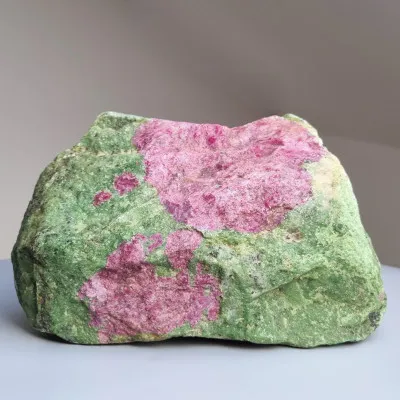
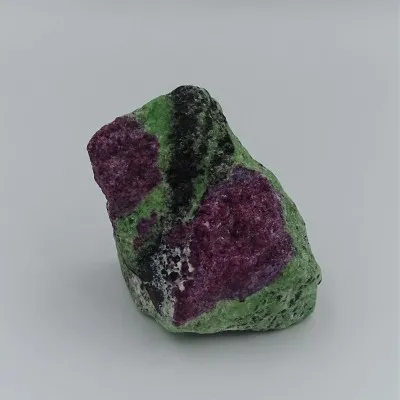
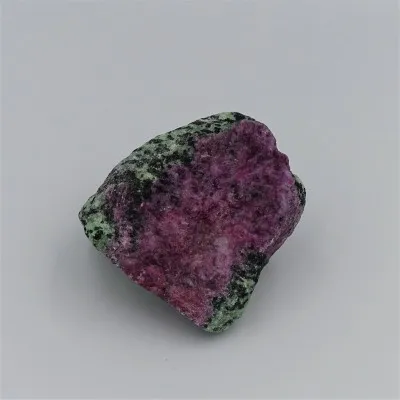
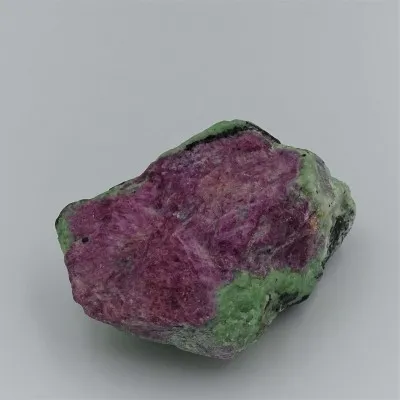
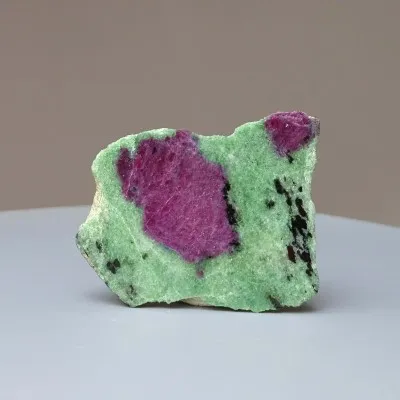
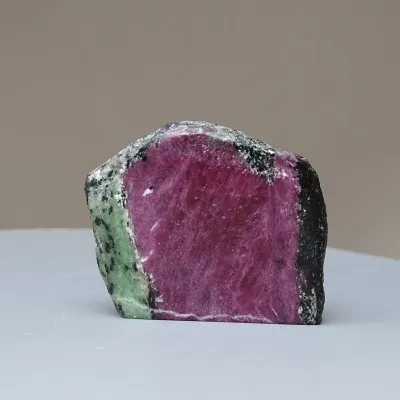
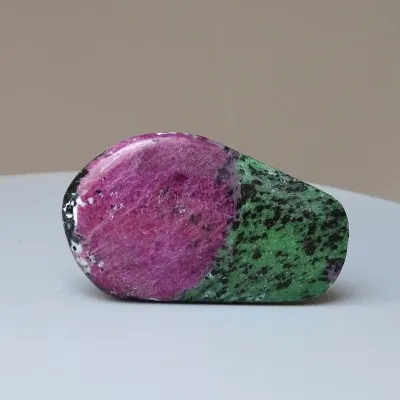
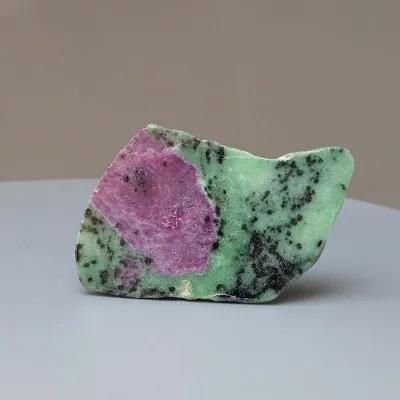
Ruby in zoisite
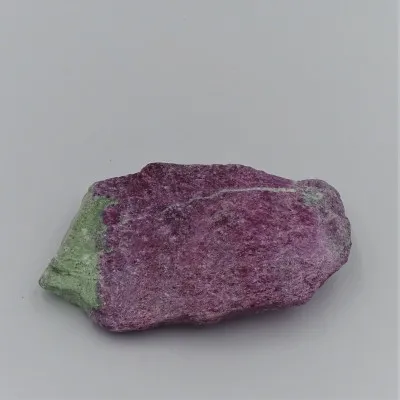
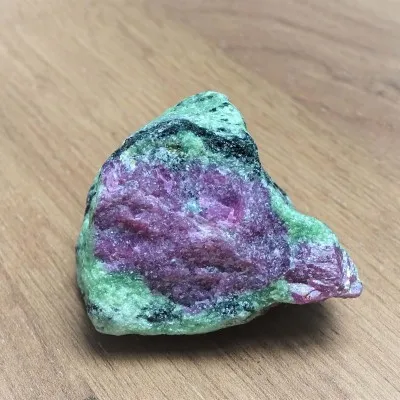
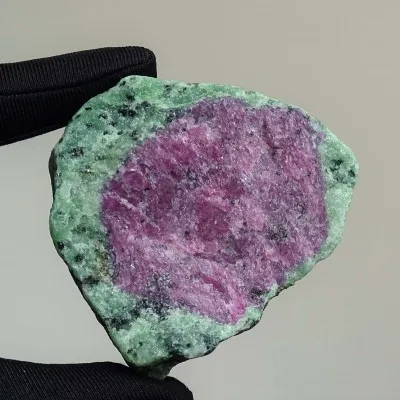
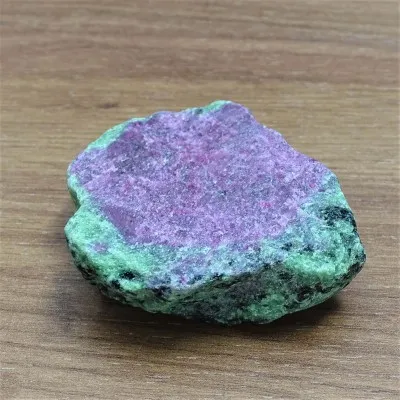
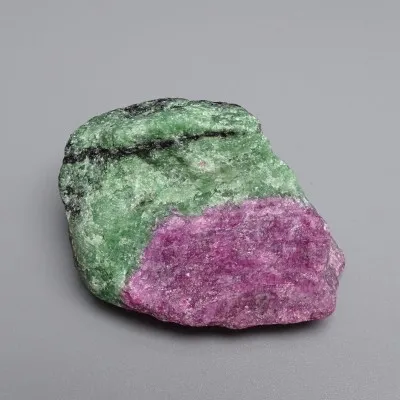
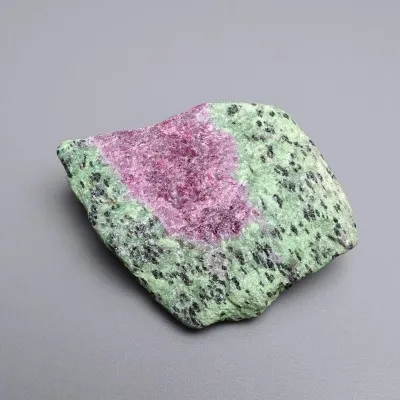
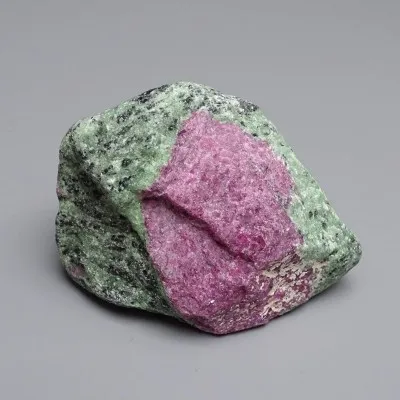
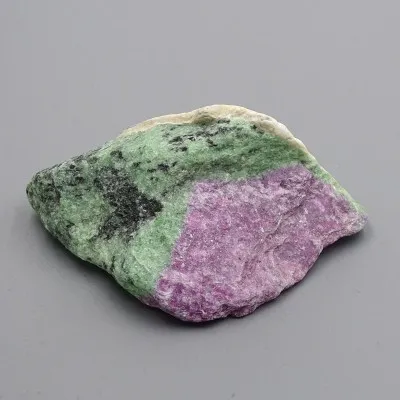
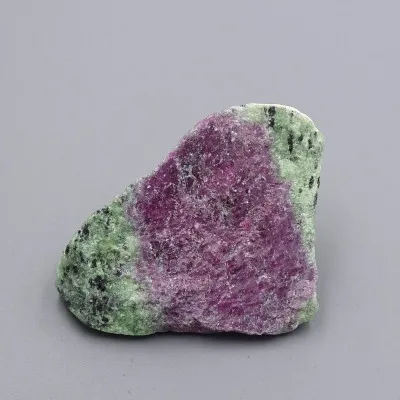
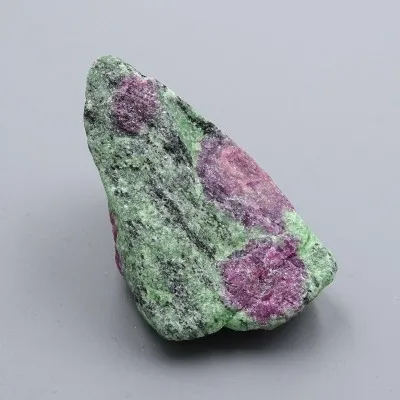
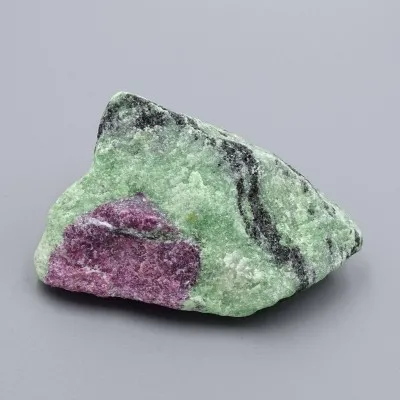
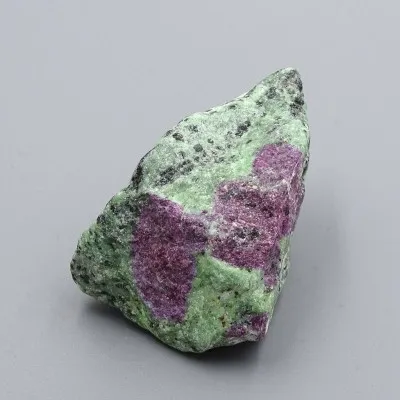
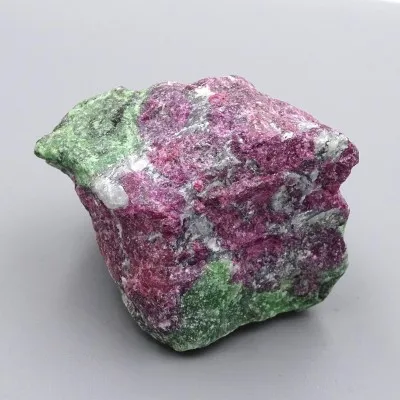
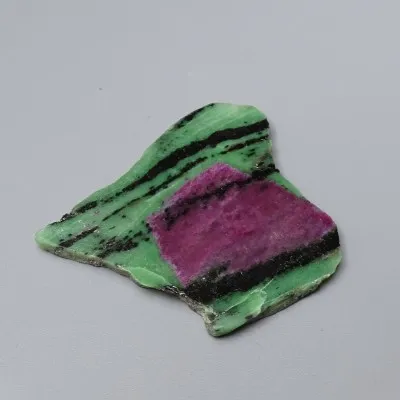
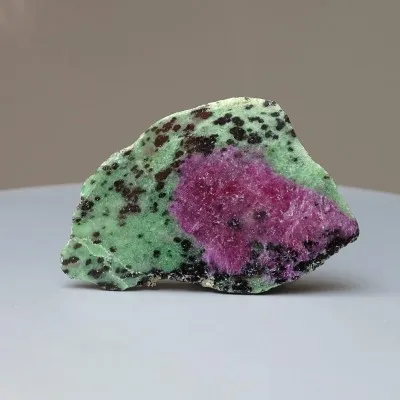
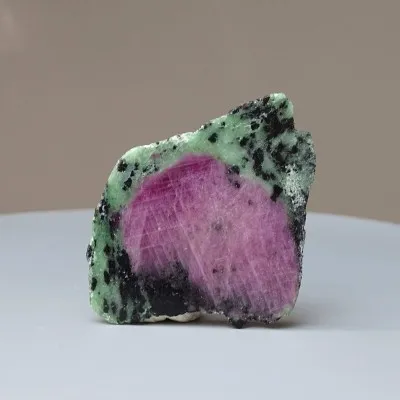
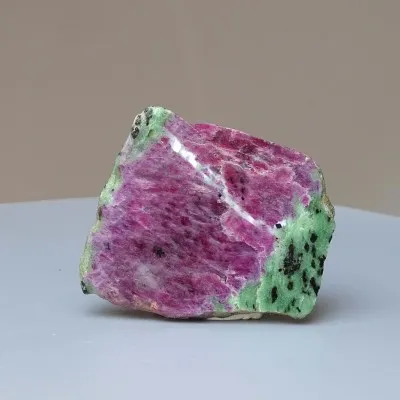
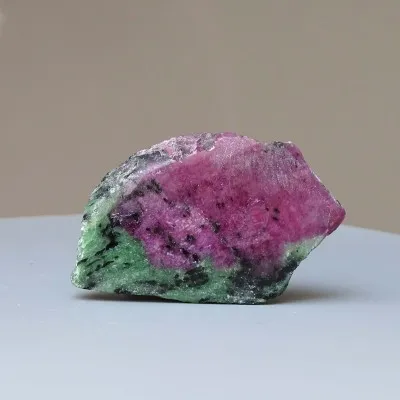
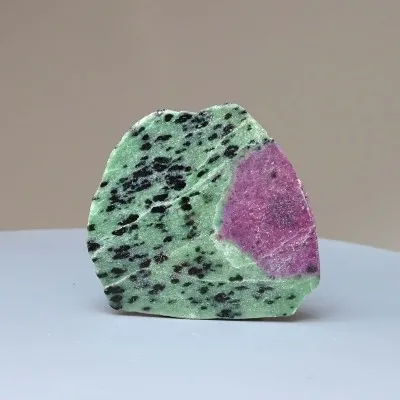
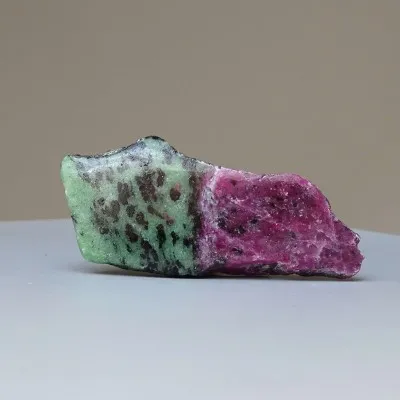
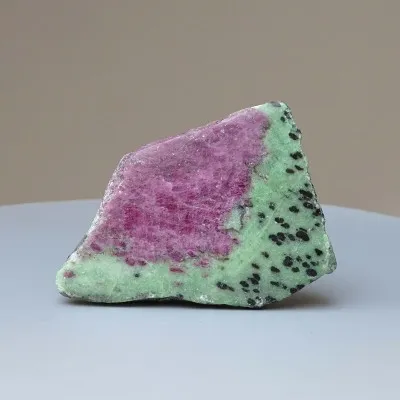
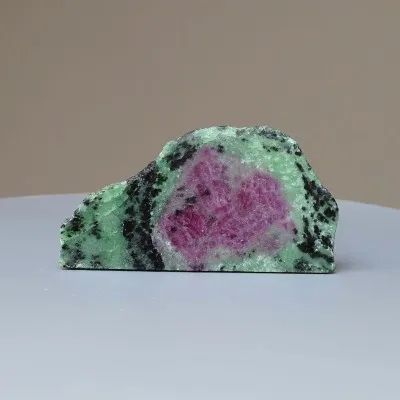
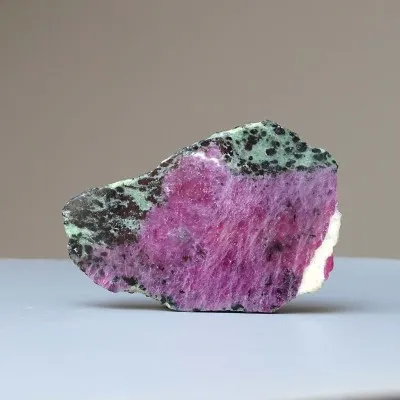
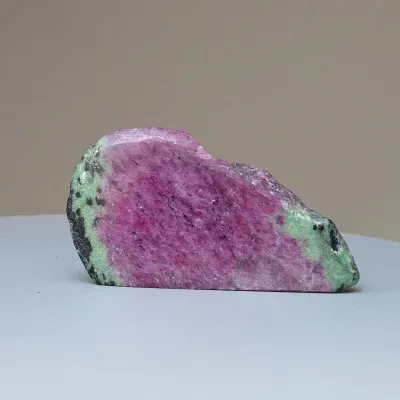
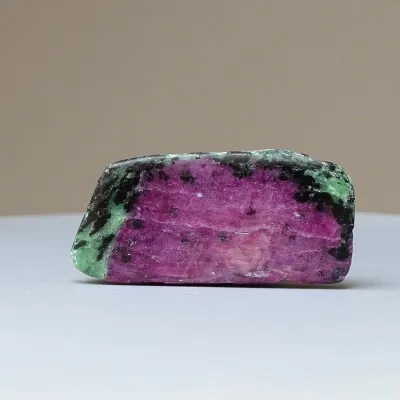
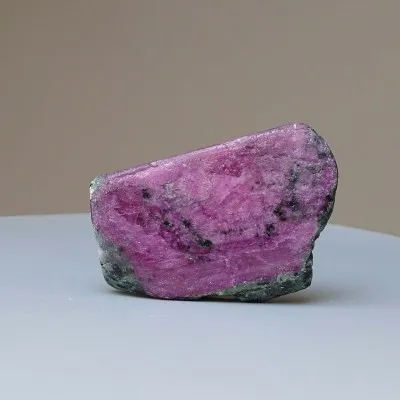
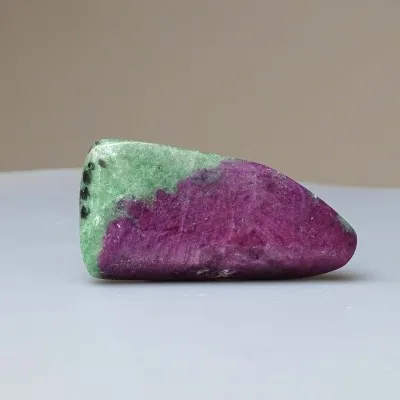
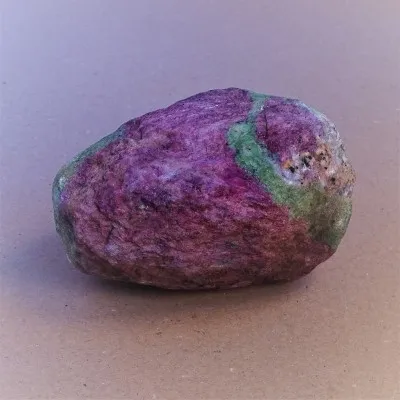
Ruby in Zoisite – a natural combination of red corundum and green zoisite
Ruby in Zoisite is a natural rock composed primarily of green zoisite containing red to purplish-red ruby crystals. It is often accompanied by dark to black mineral zones, most commonly amphiboles, creating a striking natural color contrast. This material is also widely known under the trade name Anyolite.
Ruby and zoisite are two distinct minerals with different chemical compositions and physical properties. Ruby is the red variety of corundum with the chemical formula Al₂O₃, while zoisite is a calcium aluminium silicate belonging to the epidote group. Their association formed during complex metamorphic processes, where original rocks were transformed under elevated pressure and temperature.
Ruby in zoisite is commonly fashioned into polished stones, cabochons, beads, pendants, carvings, spheres and decorative objects. Collectors especially value specimens with vivid red ruby crystals, rich green zoisite and a well-balanced natural contrast between the individual mineral components.
Basic mineralogical properties of Ruby in Zoisite
| Name | Ruby in Zoisite, Anyolite |
| Material type | Natural rock aggregate composed of several minerals |
| Main components | Ruby, zoisite and commonly dark amphibole |
| Ruby composition | Aluminium oxide, Al₂O₃ |
| Zoisite composition | Ca₂Al₃(SiO₄)(Si₂O₇)O(OH) |
| Color | Green, red to purplish red, locally black |
| Ruby hardness | 9 on the Mohs scale |
| Zoisite hardness | Approximately 6–7 on the Mohs scale |
| Luster | Vitreous to dull, depending on structure and finish |
| Transparency | Generally opaque, with ruby areas sometimes locally translucent |
How Ruby in Zoisite forms
Ruby in zoisite forms within metamorphic rocks that were subjected to elevated pressure, high temperatures and chemically active fluids during geological evolution. These processes alter the original mineral composition of the host rocks and allow new mineral assemblages to develop.
Ruby requires an aluminium-rich and silica-poor environment to form. The red color of corundum is produced by trace amounts of chromium replacing part of the aluminium within its crystal structure. Zoisite develops in rocks containing calcium, aluminium and silica and is a characteristic mineral of certain metamorphic complexes.
Individual ruby crystals are firmly embedded within the green zoisite matrix. Their distribution is irregular, making every specimen unique. Cutting and polishing therefore reveal different proportions of red, green and dark mineral zones in each piece.
Ruby, zoisite and dark mineral inclusions
The red portions of the material consist of ruby, the chromium-colored variety of corundum. In ruby in zoisite, these crystals are usually opaque to partially translucent and commonly contain natural fractures, mineral inclusions and irregular growth zoning. They are generally not gem-quality transparent rubies suitable for faceting, but rather decorative and collectible material appreciated for its striking natural color composition.
The green matrix consists of zoisite, which may range from pale green and olive green to grayish-green and dark green. Its color is influenced by trace elements, microscopic inclusions and local variations in the chemical composition of the rock.
The black or very dark areas are typically composed of amphibole minerals, commonly identified as hornblende. These minerals are a natural part of the rock and should not be considered flaws or artificial coloration. Together with the red ruby and green zoisite, they create the distinctive contrast for which the material is well known.
Ruby in Zoisite localities
The best-known and commercially most important deposits of ruby in zoisite are located in Tanzania. The material primarily comes from the Longido area in the Arusha Region of northern Tanzania, close to the Kenyan border. From this locality, ruby embedded in green zoisite became well known worldwide as a decorative, jewelry and collector's stone.
The name Anyolite is associated with a Maasai word referring to the color green. Today this trade name is mainly used for the characteristic Tanzanian material containing red ruby crystals within a green zoisite matrix accompanied by dark amphibole minerals.
The quality of individual specimens is evaluated according to color intensity and contrast, the size of the ruby crystals, structural integrity, polishing quality and overall appearance. Specimens with prominent ruby crystals in a uniformly green matrix are generally considered the most visually attractive.
Cutting and uses of Ruby in Zoisite
Because of its striking natural pattern, ruby in zoisite is widely used for cabochons, beads, pendants, bracelets, decorative spheres, eggs, obelisks, sculptures and larger ornamental carvings. The final appearance depends greatly on the cutting orientation and the distribution of ruby crystals within the rock matrix.
During processing, the different hardness values of the individual minerals must be taken into account. Ruby has a hardness of 9, whereas zoisite reaches approximately 6 to 7 on the Mohs scale. As a result, the softer matrix is polished more quickly than the much harder ruby crystals.
Although ruby itself is an exceptionally hard mineral, the rock aggregate may contain natural fractures and boundaries between different mineral components. Finished products should therefore be protected from strong impacts and accidental drops.
Frequently asked questions about Ruby in Zoisite
Is Ruby in Zoisite a separate mineral?
No. It is a natural rock aggregate composed of several minerals, primarily ruby, green zoisite and commonly dark amphiboles.
What does the name Anyolite mean?
Anyolite is the trade name commonly used for ruby in green zoisite, particularly material originating from Tanzania.
Are the red areas genuine ruby?
Yes. The red to purplish-red crystals are natural ruby, the chromium-colored variety of the mineral corundum.
Why does Ruby in Zoisite contain black areas?
The dark to black zones are generally composed of amphibole minerals. They are a natural part of the rock and not artificial coloration or defects.
Is Ruby in Zoisite suitable for jewelry?
Yes. It is widely used for cabochons, beads, pendants and decorative jewelry. However, due to natural fractures and the varying hardness of its mineral components, it should be handled with care.
How should Ruby in Zoisite be cared for?
It is best cleaned with lukewarm water, mild soap and a soft cloth. The material should be protected from impacts, sudden temperature changes, aggressive chemicals and ultrasonic cleaning.
You always purchase the exact mineral shown in the photograph. Minerals-stones.com – a wide selection of minerals, crystals, stones, tektites, jewelry and gemstones from around the world. A reliable and verified international online store, with all items in stock and ready for immediate dispatch.