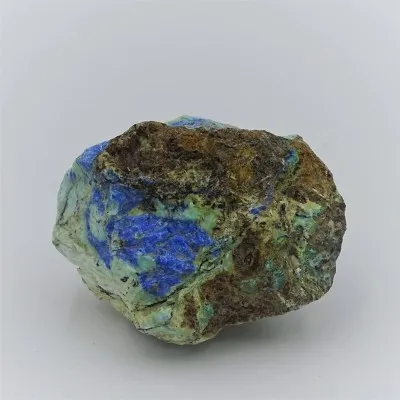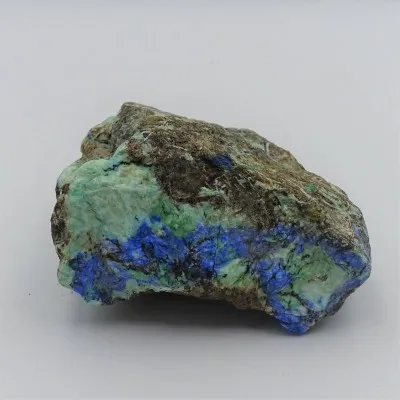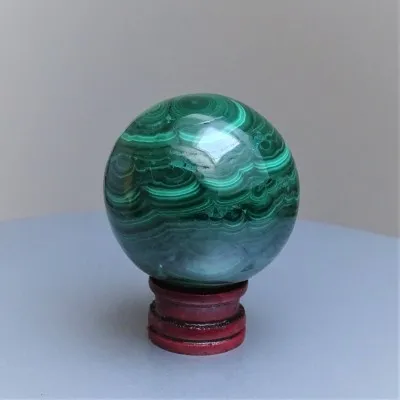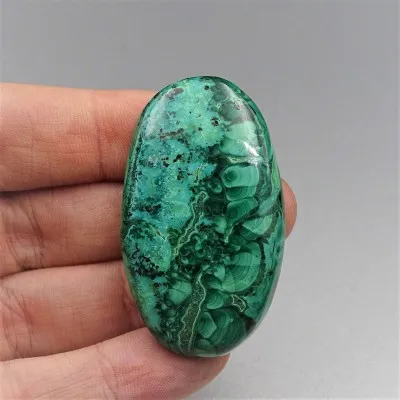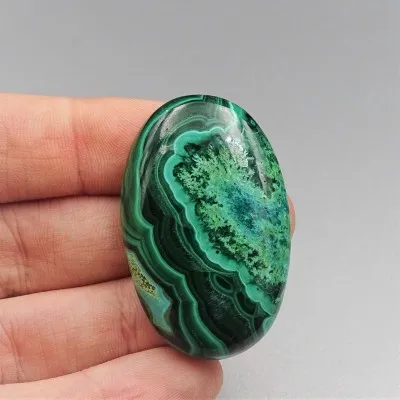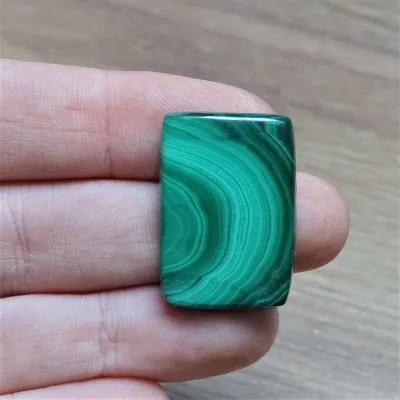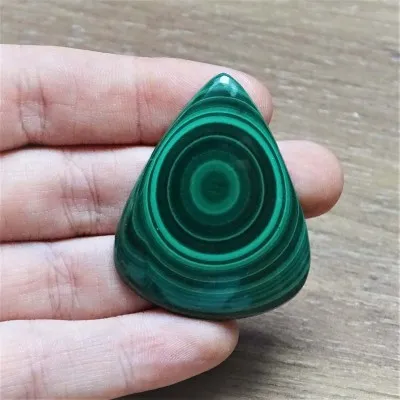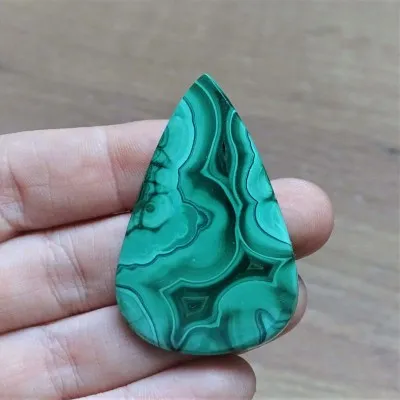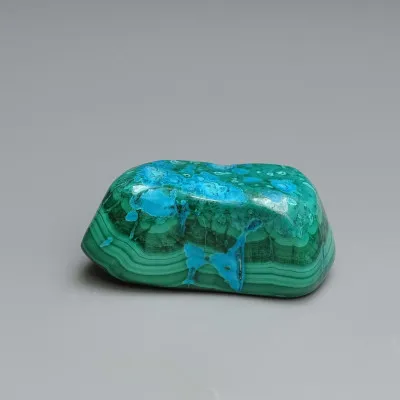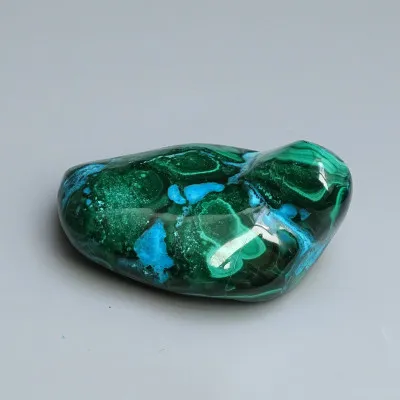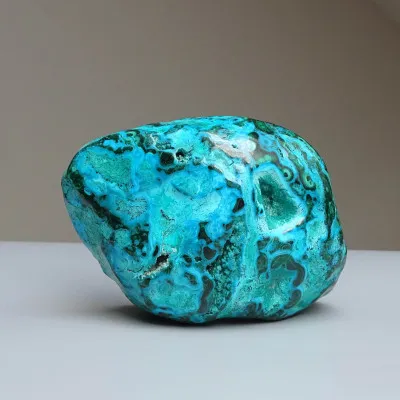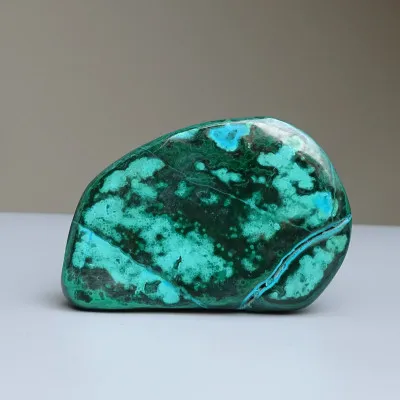
Price
$62.89
In stock
|
COOKIES SETTINGS |
Accept all cookies Personalise |
| Accept selected cookies |

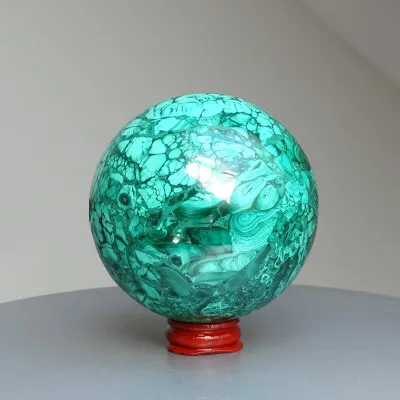
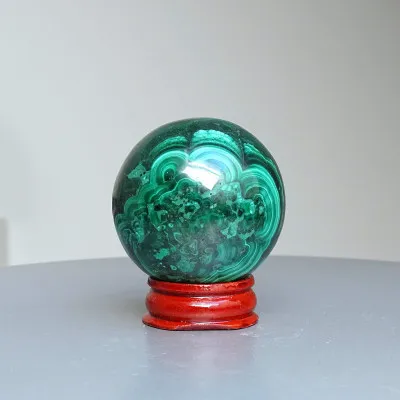
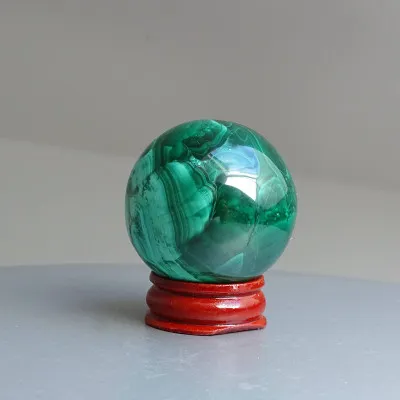
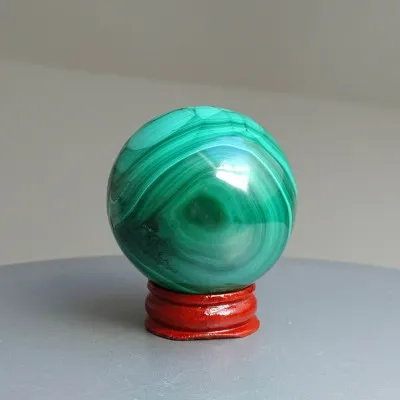
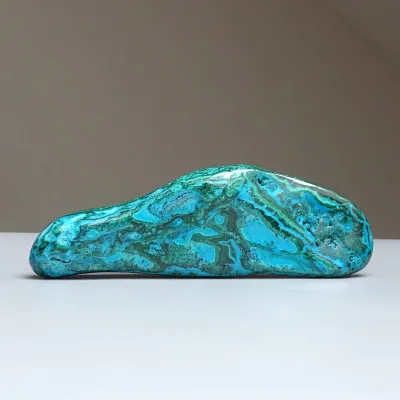
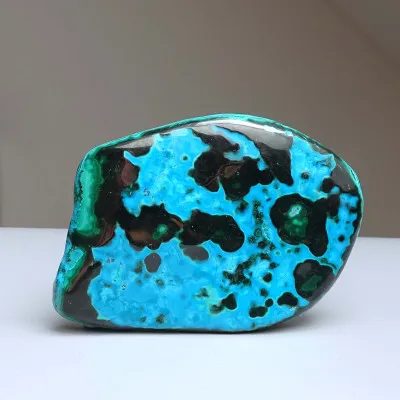
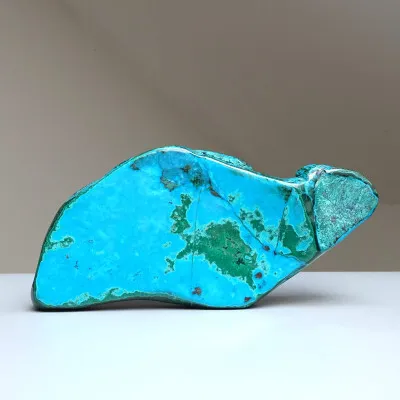
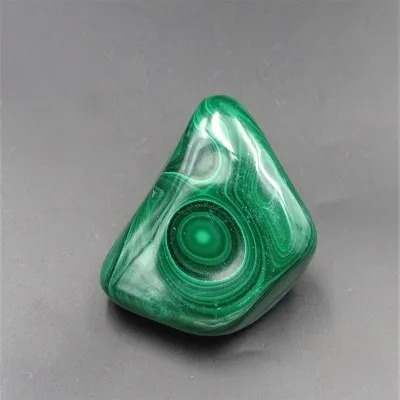
Malachite is a basic copper carbonate with the chemical formula Cu₂CO₃(OH)₂. It belongs to the carbonate mineral class and is one of the best-known secondary copper minerals. Its most distinctive feature is its rich green color, ranging from pale green through emerald green to very dark, almost blackish green.
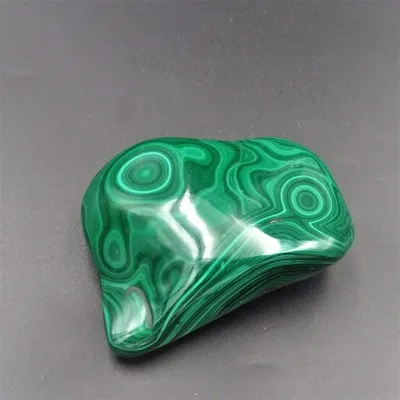
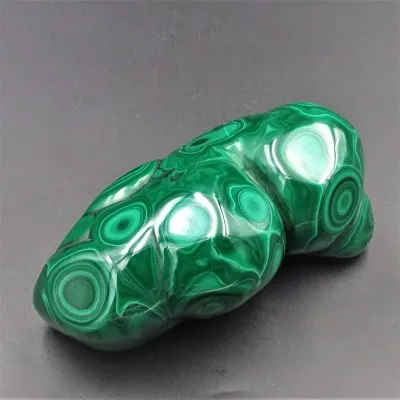
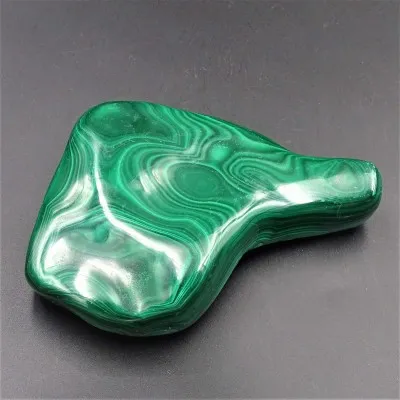
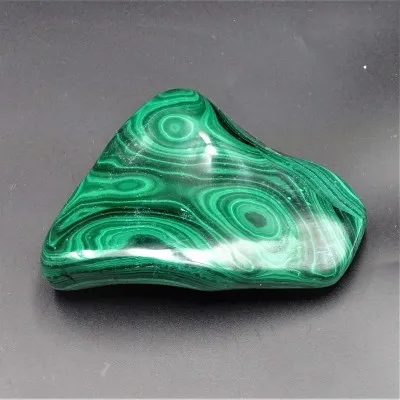
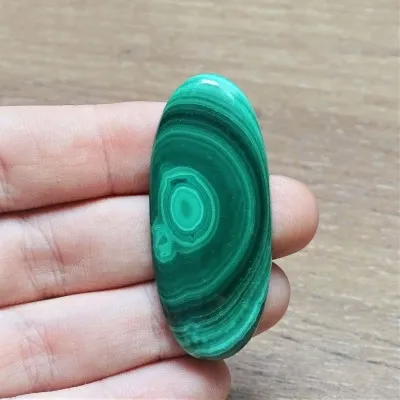
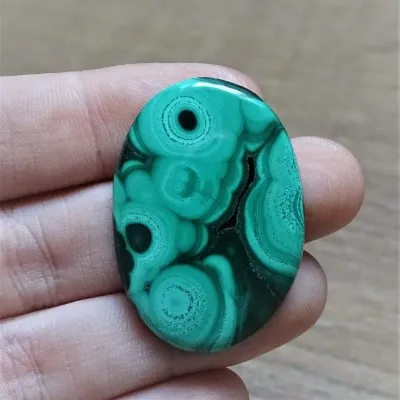
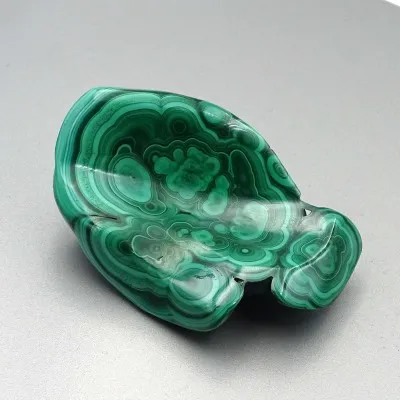
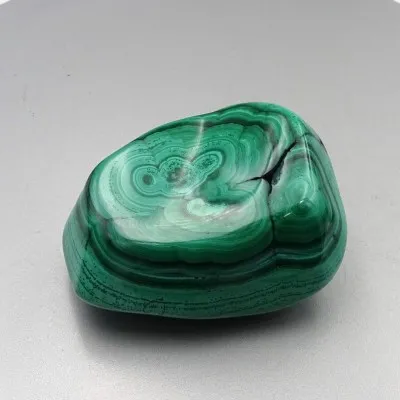
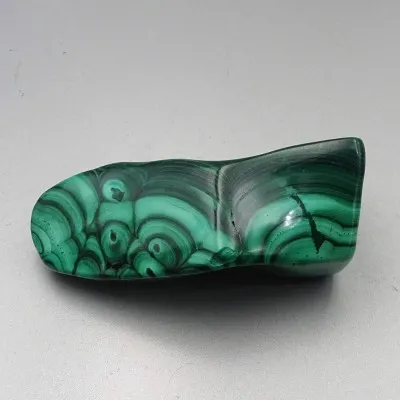
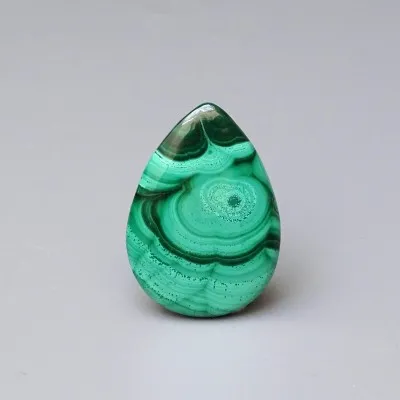
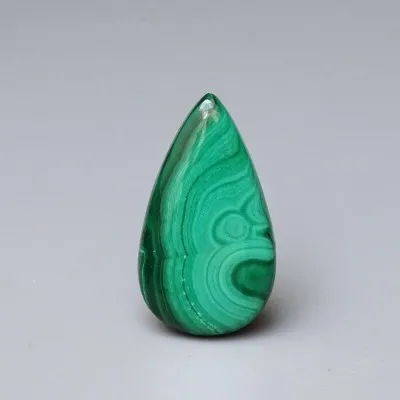
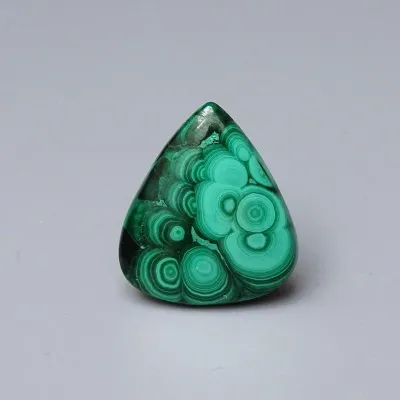
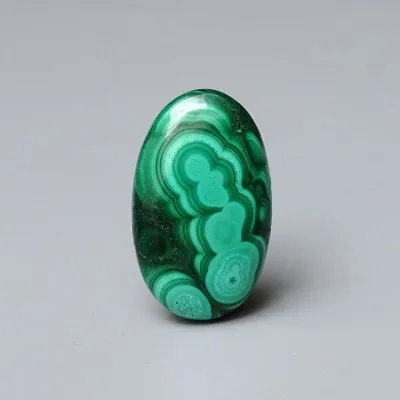
The mineral most commonly forms botryoidal, reniform, stalactitic and fibrous aggregates. It is also well known for its striking banded patterns created by alternating light and dark green layers. Well-developed individual crystals are less common and are typically needle-like, prismatic or tabular in shape.
Malachite is highly valued both as a collector's mineral and as a traditional ornamental stone. Compact banded material is cut into cabochons, beads, decorative slabs and ornamental objects. Due to its relatively low hardness, however, malachite is more sensitive to scratching, acids, sudden temperature changes and harsh chemical cleaning methods.
| Name | Malachite |
| Mineral group | Carbonates, basic carbonates |
| Chemical formula | Cu₂CO₃(OH)₂ |
| Crystal system | Monoclinic |
| Color | Light green, emerald green to dark green |
| Streak | Light green |
| Hardness | 3.5–4 on the Mohs scale |
| Density | Approximately 3.6–4.0 g/cm³ |
| Luster | Vitreous, silky to dull |
| Transparency | Translucent to opaque |
Malachite forms primarily in the oxidation zones of copper ore deposits. In these near-surface environments, primary copper sulfide minerals are altered by water, oxygen and carbon dioxide. The released copper subsequently reacts with carbonate-rich solutions, producing secondary copper minerals, of which malachite is one of the most common.
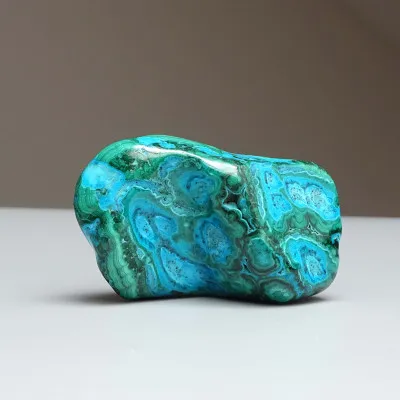
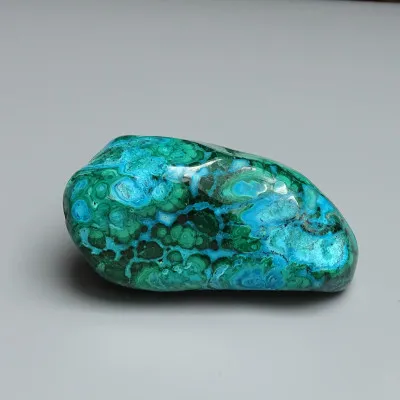
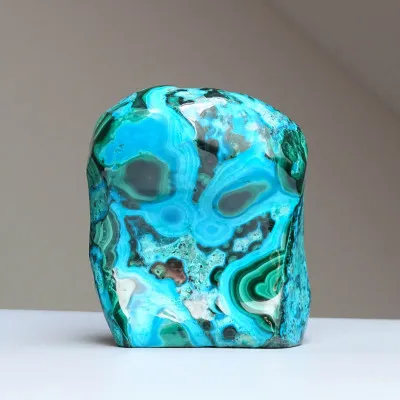
Malachite commonly occurs together with azurite, cuprite, chrysocolla, tenorite, brochantite, calcite and other secondary copper minerals. During chemical weathering, azurite may gradually alter into malachite, which is why many specimens contain both minerals within the same piece.
The characteristic banding develops through the gradual deposition of malachite within cavities, fractures and veins in the host rock. Repeated changes in chemical conditions create alternating layers with different structures and shades of green. In open cavities, malachite may also form stalactites, crusts, radiating fibrous aggregates and velvety crystal surfaces.
Malachite occurs in many copper-bearing regions around the world. The finest material differs in color intensity, banding, compactness and aggregate size.
Malachite is a green basic copper carbonate and a typical secondary mineral formed during the weathering of copper ore deposits.
Its green color is caused by copper ions incorporated into the mineral's crystal structure.
The banded appearance develops through the gradual deposition of successive layers of malachite under changing chemical conditions within cavities and fractures.
Malachite itself is not an exceptionally rare mineral. However, large, intensely colored and beautifully banded specimens can be highly valuable.
Malachite has a hardness of 3.5 to 4 on the Mohs scale, making it relatively soft and susceptible to scratching.
No. Malachite reacts with acids and may also be damaged by harsh chemical cleaners or ultrasonic cleaning.
You always purchase the exact mineral shown in the photograph. Minerals-stones.com – a wide selection of minerals, crystals, stones, tektites, jewelry and gemstones from around the world. A reliable and verified international online store, with all items in stock and ready for immediate dispatch.
There are 40 products.