- There are no more items in your cart
- Shipping
- Total $0.00
- Beads made from natural minerals
- Exclusive collection crystals and minerals
- Investment gemstones – natural cut stones
- Alexandrite – a natural gemstone with variable color
- Amethyst – cut natural stones
- Ametrine – a mineral with a combination of purple and yellow colors
- Aquamarine – a natural beryl gemstone in shades of blue
- Chrysoberyl – a gemstone of yellow-green hues
- Citrine natural cut mineral
- Emerald – a natural green beryl gemstone
- Ethiopian opal – natural cut gemstone opal
- Garnet natural cut gemstone
- Heliodor (golden beryl) natural cut gemstone
- Kunzite
- Mix other cut stones
- Moonstone – a gemstone with a pearly sheen
- Morganite natural gemstone beryl
- Olivine (peridot)
- Ruby natural cut gemstone
- Sapphire - cut natural gemstones
- Blue sapphire – a gemstone from Sri Lanka
- Green sapphire – a gemstone from Sri Lanka
- Padparadscha sapphire – a rare gemstone from Sri Lanka
- Pink sapphire – a gemstone from Sri Lanka
- Star sapphire – a sapphire with a star on the surface
- White sapphire – a gemstone from Sri Lanka
- Yellow sapphire – a gemstone from Sri Lanka
- Sinhalite
- Smokyquartz
- Spinel natural cut gemstone
- Sunstone natural cut stone
- Tanzanite – a rare natural gemstone from Tanzania
- Topaz natural cut mineral
- Tourmaline natural cut gemstone
- Zircon – natural cut gemstones with high shine
- NATURAL MINERALS - GEMSTONES - CRYSTALS - DRUISES
- Afghanite - a rare natural mineral from Afghanistan
- Agate – natural minerals, polished stones and collector's items
- Agni Manitite - dark impact glass referred to as tektite
- Amber – fossilized resin of Tertiary trees
- Amethyst – natural crystals and druses
- Ametrine – a natural mineral combining amethyst and citrine
- Andean opal – blue natural opal
- Andean opal – pink natural opal
- Angelite – natural and collector minerals
- Apatite – natural and collector minerals
- APOPHYLITE, STILBITE, ZEOLITE natural minerals and crystals
- Aquamarine – high quality natural and collector minerals
- Aragonite – natural minerals and crystalline aggregates
- Astrophyllite – rare and collectible minerals
- Auralite – a natural mineral formed by a combination of several minerals
- Axinite – a natural mineral of the borosilicate group
- Azurite – natural minerals and crystalline aggregates
- Barite – natural and collector minerals
- Brazilianite – a rare yellowish-green phosphate mineral
- Calcite – a natural calcium carbonate mineral
- Carnelian – natural minerals and polished stones
- Cavansite – natural and collector minerals
- Celestite – natural minerals and crystalline druses
- Chalcedony – natural microcrystalline quartz
- Charoite – natural and collector minerals
- Chromdiopside – a natural mineral of the pyroxene group
- CHRYSOCOLLA - MALACHITE - AZURITE
- Chrysocolla – natural minerals and polished stones
- Chrysoprase – green-colored chalcedony with nickel content
- Citrine – natural minerals and cut stones
- Clinoatacamite – a natural copper chloride mineral
- Cobaltocalcite – natural calcite containing cobalt
- Columbianite – natural and collector tektites (impact glass)
- Copper – natural pure copper and collector's items
- Danburite
- Dendritic opal (Merlinite) – natural common opal with dendrites
- Diopside – a green silicate mineral with a crystalline structure
- Dioptas – ein natürliches Kupfersilikatmineral
- Dolomite – a natural mineral of the carbonate group
- Dumortierite – a natural mineral of the borosilicate group
- Emerald – green-colored beryl of natural origin
- Ethiopian opal – natural gemstone opal
- Eudialyte – natural and collector minerals
- Fluorite – a mineral with a distinctive crystalline structure and color
- Garnet – natural and collector minerals
- Grape chalcedony – natural chalcedony with a botryoid structure
- Hackmanite – a natural mineral of the sodalite group
- Haüyn/Hauyne natural green (sodalite) mineral
- Haüyn/hauynite blue (sodalite)
- Heliodor (golden beryl) – yellow-colored beryl of natural origin
- Hemimorphite – natural and collector minerals
- Hiddenite – a natural mineral of the spodumene group
- Iolite (cordierite) – natural and collector minerals
- Jade - Jadeite natural minerals and polished stones
- Jasper – natural minerals and polished stones
- K2 - Azurite in granite
- Kunzite – a natural variety of spodumene
- Kyanite – a natural aluminosilicate mineral
- Labradorite – natural minerals and polished stones
- Lapis lazuli/lazurite – natural minerals and polished stones
- Larimar – a rare blue natural mineral
- Lemurian crystal – natural and collectible quartz crystals
- Libyan glass – natural tektite formed by an impact event
- Lodolite (quartz crystal with inclusions)
- Malachite – natural minerals and polished stones
- Meteorite – a natural rock and metal material from space
- Moldavite – rare natural tektite (impact glass)
- Moonstone (adular) – natural feldspar with adularescence
- Moqui Marbles – natural sandstone concretions with iron oxides
- Morganite – a natural gemstone of the beryl group
- Natural mussels (freshwater mussels)
- Nefrite, Jade – natural minerals and polished stones
- Nuummite – Archean metamorphic rock from Greenland
- Obsidian – natural collectible volcanic glass
- Olivine (peridot) – green magnesium-iron silicate
- Pentagonite rare blue mineral
- Petalite – a natural lithium aluminum silicate mineral
- Phenacite/Phenakite – a natural non-silicate mineral containing beryllium
- Phosphosiderite – natural and collector minerals
- Pietersite natural mineral – brecciated chalcedony with fibrous inclusions
- Pollucite - a rare natural zeolite mineral of pegmatite origin
- Prehnit – natural and collector minerals
- Pyrite – a natural mineral
- Quantum Quattro – a natural association of chrysocolla, shattuckite, dioptase and malachite
- Quartz/crystal - raw
- Quartz/crystal – processed natural minerals
- Rhodochrosite – a natural manganese carbonate mineral
- Rhodonite – a natural manganese silicate mineral
- Rose quartz – a natural variety of quartz
- Roselite – natural and collector minerals
- Rubelit/red tourmaline
- Ruby in zoisite
- Ruby – natural and collectible gemstones
- Sagenite (Venus' hair) – natural quartz with rutile inclusions
- Sapphire – a natural gemstone of the corundum group
- Scapolite – a natural mineral of the tectosilicate group
- Scolecite – fibrous zeolite with needle-like crystals
- Selenite – a natural crystalline variety of gypsum
- Seraphinite – dark green clinchlorite with a typical pattern
- Shungite – Precambrian carbonaceous rock from Karelia
- Skoryl (tourmaline) – natural and collector minerals
- Smoky quartz – a natural variety of quartz
- Smokyquartz with rutile – natural quartz with rutile inclusions
- Sphalerite – zinc sulfide with significant color variability
- Spinel – natural gemstone
- Sugilite – natural minerals and polished stones
- Sunstone with iolite – natural and collector minerals
- Sunstone – natural feldspar with aventurescence
- Superseven (Super 7) – natural quartz with multiple mineral inclusions
- Tanzanite gemstone – a blue-violet variety of zoisite of natural origin
- Tektite – a natural glassy material formed by an impact event
- Thulite is a pink variety of the mineral zoisite
- Tiger's Eye – natural minerals and polished stones
- Titanite (sphene) – natural and collector minerals
- Topaz – natural and collectible gemstones
- Tourmaline – natural and collector minerals
- Triplite – natural and collector minerals
- Tugtupit
- Turquoise – natural minerals and polished stones
- Vanadinite – a natural lead vanadate mineral
- Vesuvianite (idocrase) – a natural silicate mineral
- Zircon – natural and collector's gemstones
- Original jewelry made from natural minerals and gemstones
- Bracelets made of natural minerals
- Other jewelry made from natural minerals
- Silver and gemstone jewelry
- Abalone/Paua shell
- Aquamarine natural mineral beryl pendant
- Astrophyllite – silver pendant made of natural mineral
- Azurite silver pendant made of natural mineral
- Azurite-malachite-chrysocolla silver pendant made of natural mineral
- Black tourmaline (scoryl)
- Charoite – silver pendant made of natural mineral
- Chrysoprase – silver pendant made of natural chalcedony
- Cobaltocalcite – silver pendants made from a natural mineral
- Dendritic opal – pendants made of natural opal with dendrites
- Ethiopian opal – silver pendant made of natural gemstone
- Eudialyte – silver pendant made of natural mineral
- Kavansite – silver pendants made from natural mineral
- Kunzite and hiddenite – silver pendants made of natural spodumene
- Labradorite – silver pendant made of natural mineral
- Larimar jewelry – silver pendants made from a unique natural mineral
- Malachite – jewelry made from natural mineral
- Moldavite
- Moonstone (adular) – jewelry made from a natural mineral
- Morganite – jewelry made from natural gemstone
- Nuummite – natural mineral silver pendant
- Obsidian – pendants made of natural volcanic glass
- Olivine/Peridot
- Pietersite – silver jewelry made from natural chalcedony
- Quantum Quattro – jewelry made from the natural association of chrysocolla, malachite and shattuckite
- Rhodochrosite – silver pendant made from a natural mineral
- Ruby
- Sagenit
- Seraphinite – jewelry made from the chlorite variety with a pearly pattern
- Sugilite – pendants made from natural mineral
- Sunstone jewelry
- Turquoise – jewelry made from a natural mineral
- Special offer – discounts on natural minerals and gemstones
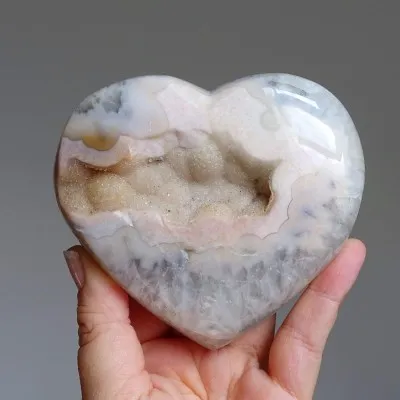
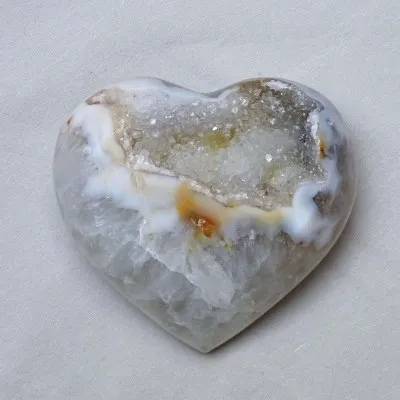
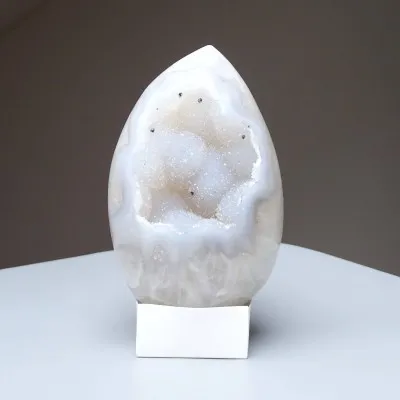
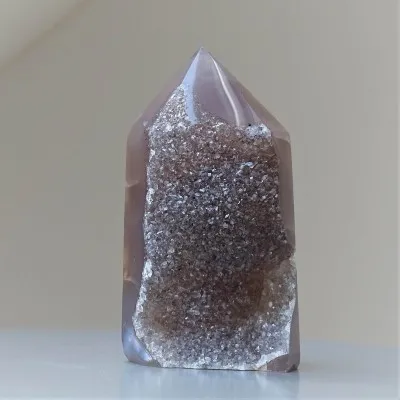
Agate – natural minerals, polished stones and collector's items
Agate – a natural variety of chalcedony with distinctive banding
Agate is a natural fine-grained variety of chalcedony, which is a microcrystalline form of quartz with the chemical composition SiO₂. It is best known for its characteristic banded, layered or irregular patterns formed by the gradual deposition of silica-rich solutions inside cavities of rocks.
Agate occurs in a remarkable range of colors, including white, gray, brown, red, orange, blue, green and almost black. Its natural coloration is influenced by iron, manganese and other mineral impurities. Some agates display uniform colors, while others feature striking concentric bands, landscape-like patterns, mossy structures or cavities lined with tiny quartz crystals.
Thanks to its hardness, durability and exceptional natural patterns, agate is one of the world's most popular ornamental and collector's stones. It is widely used for cabochons, beads, polished slices, decorative objects and as a natural mineral specimen.
Basic mineralogical properties of agate
| Name | Agate |
| Mineral group | Chalcedony, microcrystalline quartz |
| Chemical formula | SiO₂ |
| Crystal system | Trigonal, microcrystalline structure |
| Color | White, gray, brown, red, orange, blue, green to black |
| Hardness | Approximately 6.5–7 on the Mohs scale |
| Density | Approximately 2.58–2.64 g/cm³ |
| Luster | Waxy to vitreous |
| Transparency | Translucent to opaque |
| Typical pattern | Banded, layered, eye-shaped, landscape or moss-like |
How agate forms
Agate most commonly forms inside cavities of volcanic rocks, particularly basalt. Silica-rich fluids enter these empty spaces and gradually deposit extremely fine layers of microcrystalline quartz. Repeated episodes of mineral deposition with slightly different chemical compositions create the characteristic bands and color patterns.
Some cavities become completely filled, while others retain an open center where quartz or amethyst crystals may grow. These formations are known as agate geodes. The final shape of the agate reflects the original cavity within the host rock.
The colors of agate are mainly produced by iron oxides, manganese and other mineral impurities. Red and brown shades are commonly associated with iron compounds, while darker patterns often result from manganese-rich inclusions.
Major agate localities
Agates occur worldwide, especially in regions with volcanic rocks. Individual deposits are well known for their distinctive colors, patterns and structures.
- Brazil and Uruguay: among the world's leading sources of agate geodes and banded agates used for cutting and polishing.
- Madagascar: famous for colorful agates featuring landscape, moss and banded patterns.
- Mexico: renowned for fire agates and decorative agates with striking natural designs.
- United States: important deposits occur in Oregon, Montana, Arizona and several other states.
- Czech Republic: classic collecting localities include the Kozákov region, the foothills of the Krkonoše Mountains and northern Bohemia.
Frequently Asked Questions about Agate
What is agate?
Agate is a fine-grained banded variety of chalcedony composed primarily of silicon dioxide.
Why does agate have colored bands?
The bands form through repeated deposition of silica-rich solutions containing different mineral impurities.
Are all agates naturally colored?
No. Some agates available on the market have been dyed or heat-treated. Bright blue, pink or purple colors are often artificially enhanced.
What is the difference between agate and chalcedony?
Agate is a variety of chalcedony distinguished by its characteristic banded or layered structure, while ordinary chalcedony is often more uniform in appearance.
How hard is agate?
Agate has a hardness of approximately 6.5 to 7 on the Mohs scale, making it highly suitable for jewelry and decorative objects.
What is an agate geode?
An agate geode is a hollow rock formation lined with layers of agate, often containing quartz or amethyst crystals in its central cavity.