|
COOKIES SETTINGS |
Accept all cookies Personalise |
| Accept selected cookies |

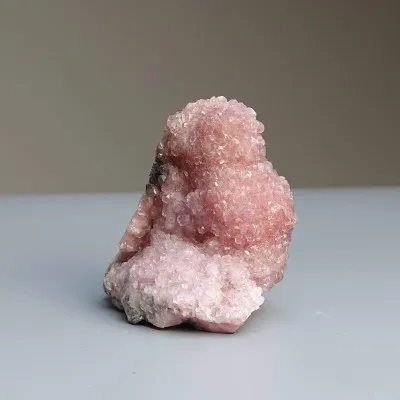
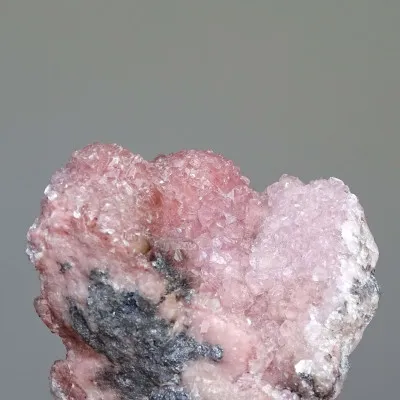
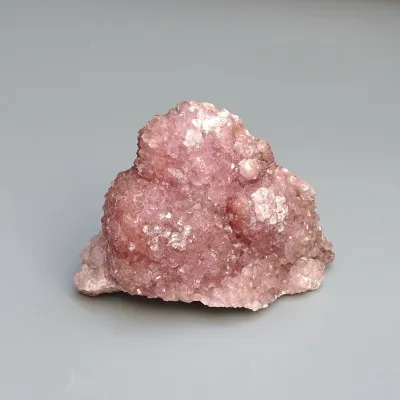
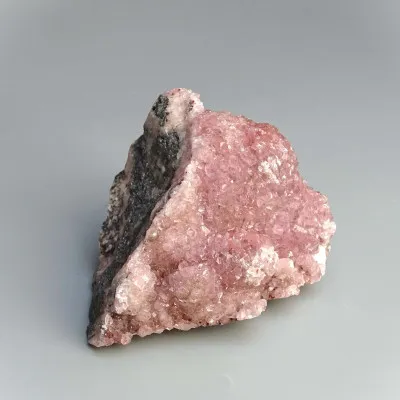
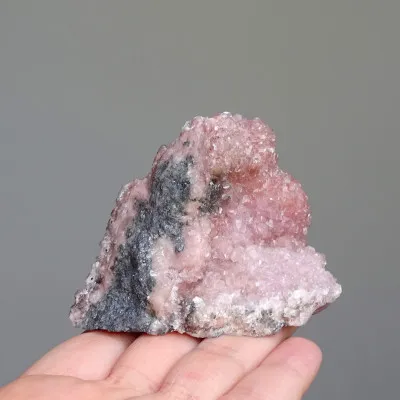
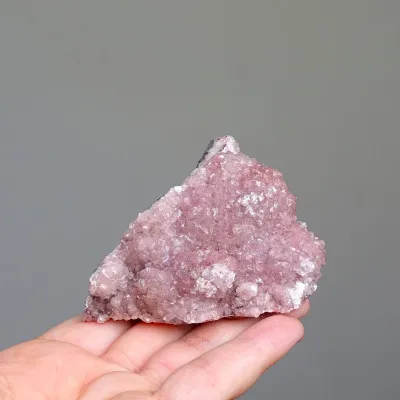
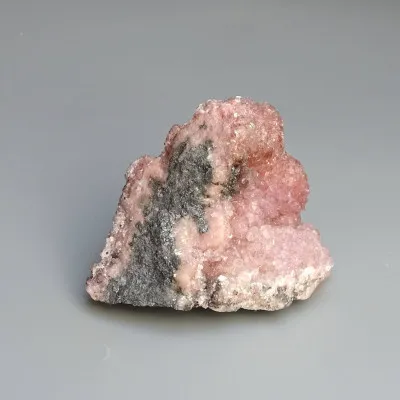
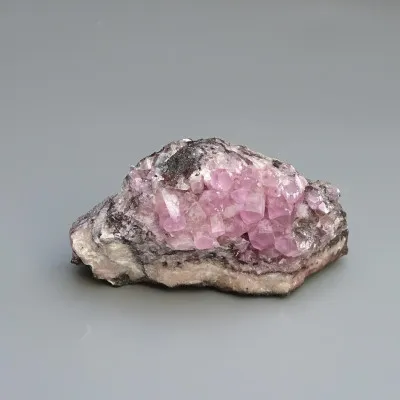
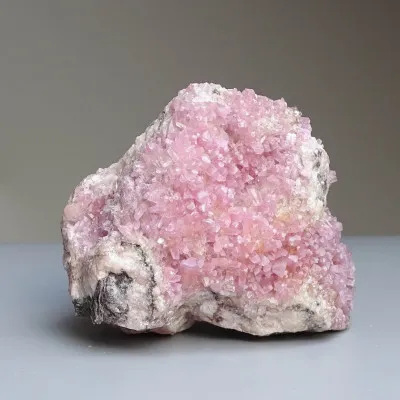
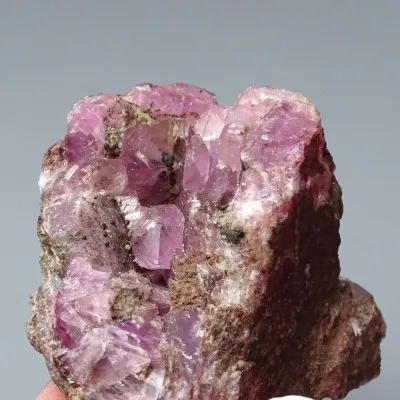
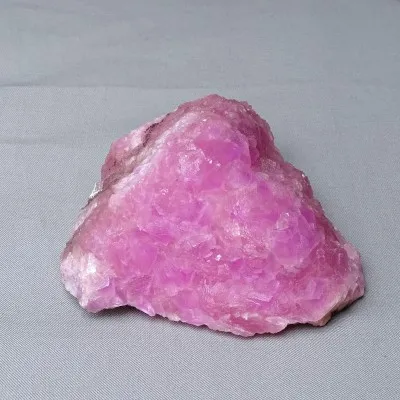
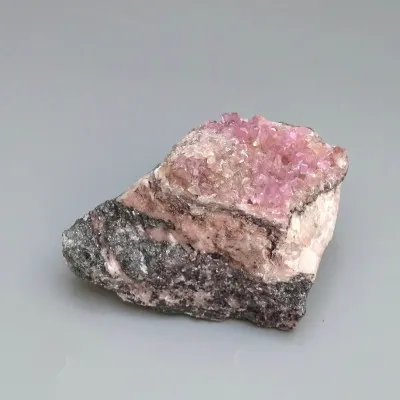
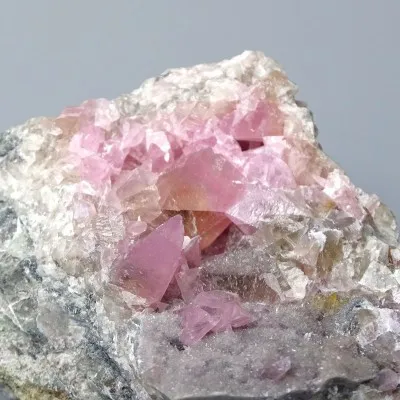
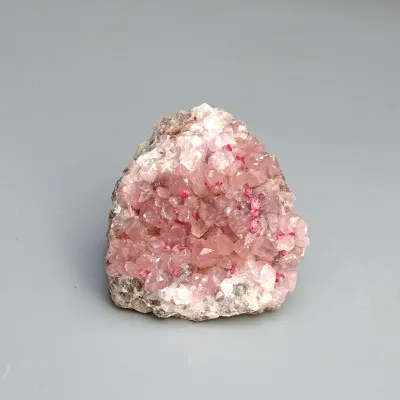
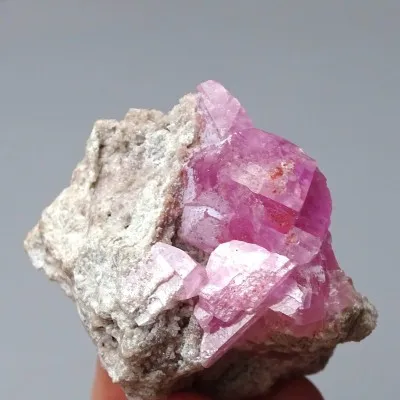
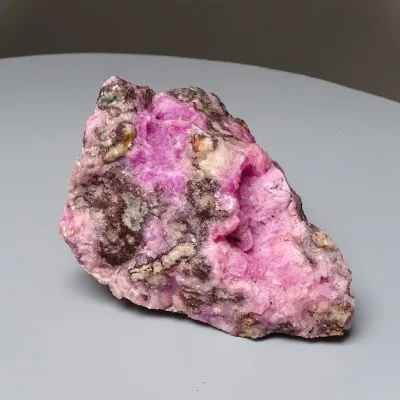
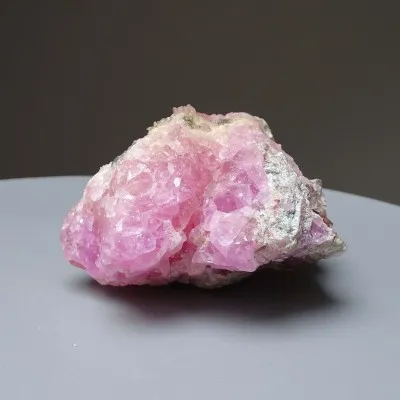
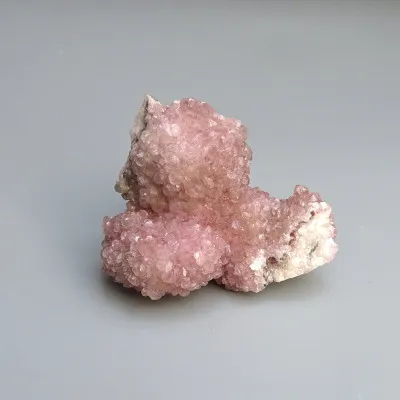
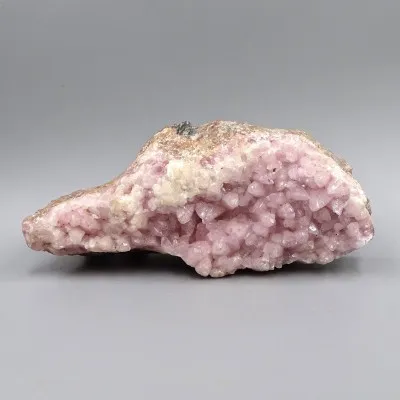
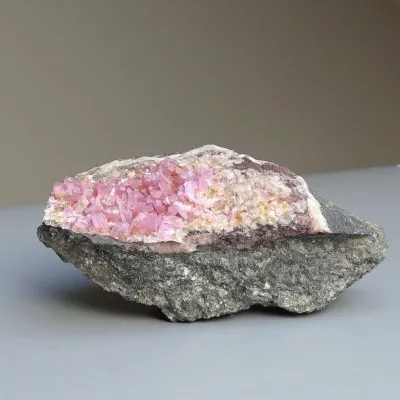
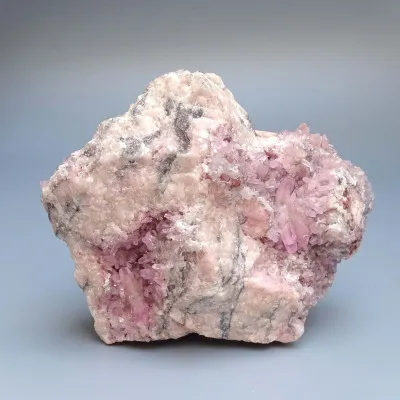
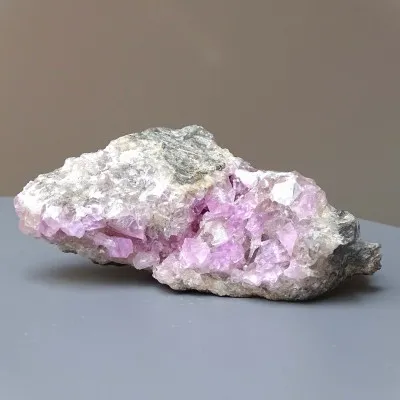
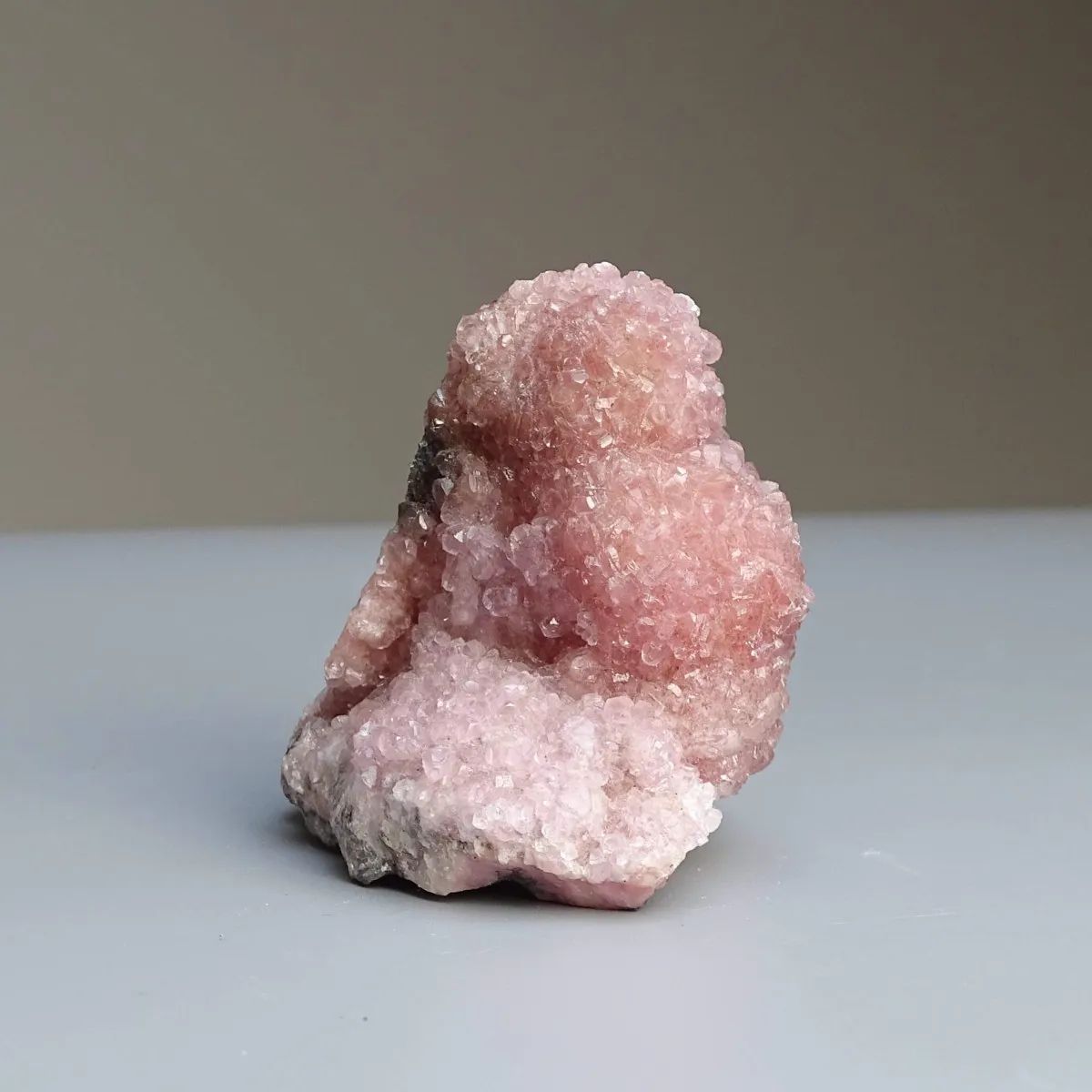
Attractive collection cobaltocalcite consisting of soft pink to light raspberry calcite crystals on a natural rock matrix. The crystals have a nice shine, sometimes translucent appearance and create a decorative crystalline druse with pronounced pink accents. This piece stands out with its pleasant color, natural structure and contrast between the pink cobalt colored calcite and the light matrix. Suitable as a collector's mineral, an aesthetic piece for a display case or a demonstration of cobalt mineralization.
Weight: 189 g
Dimensions: 5.69 x 7.37 x 4.48 cm
Color: pink
Country of origin: Ouarzazate Province, Bou Azzer, Morocco
You always buy the mineral shown in the photo!
Cobaltoan calcite, often also called cobalt calcite or cobaltocalcite, is a pink to intense raspberry-colored variety of calcite whose color is caused by the presence of cobalt. It belongs among highly attractive collector minerals because it combines delicate to vivid pink coloration, the crystalline structure of calcite and a connection with cobalt-rich ore environments. The finest specimens may form druses, coatings, crystalline aggregates, pink crusts or lustrous crystals on a rock matrix.
Cobaltoan calcite is not a separate mineral species, but a cobalt-colored variety of calcite. Its basic chemical composition is based on calcite, CaCO3, while part of the calcium in the crystal structure may be replaced by cobalt. In practice it is therefore described as CaCO3 with Co impurity or, in simplified form, as (Ca,Co)CO3.
The best-known cobaltoan calcites come from cobalt- and copper-bearing ore districts, especially from the Democratic Republic of the Congo, Morocco, some historical European ore districts and other localities. In mineral collections, cobaltoan calcite is valued mainly for its natural pink to raspberry color, luster, crystal development, preservation and documented origin.
Note: the table is horizontally scrollable on mobile devices so it remains readable and does not collapse into narrow columns.
| Property | Data | Collector significance |
|---|---|---|
| Name | Cobaltoan calcite, cobalt calcite, cobaltocalcite | Commercial and mineralogical term for cobalt-colored calcite. |
| Basic composition | CaCO3 with Co impurity, often given as (Ca,Co)CO3 | Cobalt is the main cause of the pink to raspberry coloration. |
| Mineral group | Carbonates, variety of calcite | Shares basic properties of calcite, including low hardness and reaction with acids. |
| Crystal system | Trigonal, like calcite | May form crystals, druses, coatings, aggregates and granular or massive portions. |
| Hardness | Approximately 3 on the Mohs scale | Soft, easily scratched and requiring careful handling. |
| Luster | Vitreous to pearly, sometimes duller on fine coatings | Lustrous and intensely pink crystals are especially attractive to collectors. |
| Color | Light pink, salmon pink, raspberry, fuchsia to purplish pink | Color saturation and evenness strongly influence aesthetic value. |
| Cleavage | Perfect rhombohedral cleavage | May chip when struck and is therefore unsuitable for rough handling. |
| Reaction with acid | Reacts with diluted acid like calcite | The test is destructive and is not recommended for collector specimens. |
| Typical associations | Dolomite, calcite, quartz, malachite, azurite, heterogenite, erythrite, cobalt and copper minerals depending on locality | Contrast with associated minerals and matrix can increase the value of the specimen. |
Cobaltoan calcite forms in environments where carbonate mineralization is combined with the presence of cobalt. In practice, these are often oxidized or hydrothermally influenced parts of ore deposits where circulating solutions transport calcium, carbonate components and trace amounts of cobalt.
When suitable chemical conditions develop, calcite crystallizes and cobalt may be partially incorporated into its structure. This impurity gives the mineral its pink, raspberry or purplish pink color. The stronger and cleaner the cobalt coloration, the more attractive the specimen usually appears.
Cobaltoan calcite may occur as a fine crystalline coating, druse, small lustrous crystals, more massive pink area or pink mineral aggregate on an ore or carbonate matrix.
The typical color of cobaltoan calcite is pink. The shade, however, may vary significantly depending on cobalt content, impurities, crystal size, lighting, matrix and overall preservation of the specimen. Some pieces are delicate salmon pink, while others are intense raspberry to almost fuchsia.
| Color | Possible appearance | Collector significance |
|---|---|---|
| Light pink | Delicate pink coatings or pale crystalline aggregates. | Aesthetic, though usually less striking than intensely colored pieces. |
| Salmon to pink-violet | Warmer shades on a pale or ore-bearing matrix. | Works very well in combination with white calcite, dolomite or darker rock. |
| Raspberry | Vivid pink to reddish-pink crystals or druses. | Very attractive collector appearance, often sought after for strong color. |
| Fuchsia to purplish pink | Intensely colored crystalline surfaces or aggregates. | In well-preserved specimens, this creates a very expressive premium character. |
Cobaltoan calcite occurs mainly in areas where cobalt mineralization is present in rocks and ore veins. It is not a common type of calcite, because its characteristic pink coloration requires a specific geochemical environment with cobalt.
Democratic Republic of the Congo is among the best-known sources of intense pink to raspberry cobaltoan calcite. The areas of the former Katanga region, especially the broader Kolwezi area in Lualaba Province, are associated with rich copper-cobalt mineralization and aesthetic pink specimens on matrix.
Morocco is important mainly because of its cobalt and ore districts, especially the broader Bou Azzer region in the Anti-Atlas. Moroccan specimens may be associated with cobalt minerals, carbonate mineralization, erythrite, dolomite, quartz and other minerals of ore environments. For individual specimens, an exact locality should only be stated when it is actually documented.
Europe has historical cobalt and silver districts where cobalt-colored carbonates may occur. Examples include some areas of Germany, especially historical ore districts in Saxony. Cobalt-bearing carbonates and related associations are also reported from various European ore districts depending on the specific locality.
Other occurrences may come from regions with copper-cobalt mineralization in Africa, Europe, Australia, North America and other parts of the world. For collector-grade cobaltoan calcite, origin is very important because color, structure, associated minerals and overall appearance may differ significantly between localities.
Cobaltoan calcite is a cobalt-colored variety of calcite. The base is CaCO3, and the pink color is caused by cobalt.
Ordinary pink calcite does not automatically have to be cobaltoan calcite. Pink coloration can have different causes, so for precise naming, locality, appearance and, if needed, expert analysis are important.
Rhodochrosite is a different mineral – manganese carbonate, MnCO3. It can also be pink, but chemically it is a separate mineral species. These names should therefore not be used interchangeably in product descriptions.
Like calcite, cobaltoan calcite is a soft and cleavable mineral. It can easily scratch, chip or become damaged in acidic environments. Cleaning with vinegar, acids, aggressive chemicals, ultrasonic cleaners, steam or hard brushes is not suitable.
Store the specimen separately from harder minerals such as quartz, amethyst, tourmaline or topaz. With druses and fine crystalline coatings, contact should be minimized because tiny crystals may be mechanically damaged.
For normal dust removal, a fine dry brush or soft cloth is sufficient. With valuable collector specimens, it is often better not to clean at all than to risk loss of luster, crystals or surface structure.
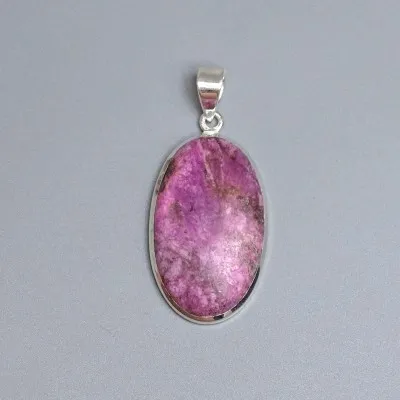
Cobaltoan calcite is a beautiful collector mineral, but because of its low hardness, cleavage and sensitivity to acidic environments, it is not ideal for rings or jewelry intended for everyday wear. In jewelry it may be used only exceptionally and with a protective setting design.
Its main value is collector, aesthetic and mineralogical. It looks best as an individual display specimen, as part of a thematic carbonate collection, as an example of cobalt mineralization or as a contrasting pink mineral on matrix.
Cobaltoan calcite is a cobalt-colored variety of calcite. Its basic composition is based on CaCO3, while the pink to raspberry color is caused by cobalt.
No. From a mineralogical point of view, it is a variety of calcite, not a separate mineral species. The name is used for cobalt-colored calcite.
The base is calcium carbonate CaCO3 with a cobalt impurity. In practice, (Ca,Co)CO3 is often used, because part of the calcium may be replaced by cobalt.
The best-known occurrences come from copper-cobalt and ore districts, especially the Democratic Republic of the Congo, Morocco, historical European ore districts and other localities with cobalt mineralization.
The pink, raspberry to fuchsia color is caused by cobalt. Color intensity depends on its amount, crystal structure, purity and locality.
Protect it from acids, vinegar, aggressive chemicals, ultrasonic cleaning, impact and scratching. Clean only with a fine dry brush or soft cloth.
The MINERALS-STONES® project specializes in natural minerals, crystals, druses, tektites, gemstone materials and investment gemstones. With cobaltoan calcite, we focus on origin, color, structure, luster, preservation, associated minerals and the real appearance of each individual specimen.
Cobaltoan calcite is a mineral where natural color, mineralogical context and the aesthetics of the individual specimen are decisive. For individually listed minerals, the customer usually buys the exact piece shown in the photographs. Every natural cobaltoan calcite is unique – no two pieces have exactly the same pattern, shape or color shade.
Attractive collection cobaltocalcite consisting of soft pink to light raspberry calcite crystals on a natural rock matrix. The crystals have a nice shine, sometimes translucent appearance and create a decorative crystalline druse with pronounced pink accents. This piece stands out with its pleasant color, natural structure and contrast between the pink cobalt colored calcite and the light matrix. Suitable as a collector's mineral, an aesthetic piece for a display case or a demonstration of cobalt mineralization.
Weight: 189 g
Dimensions: 5.69 x 7.37 x 4.48 cm
Color: pink
Country of origin: Ouarzazate Province, Bou Azzer, Morocco
You always buy the mineral shown in the photo!