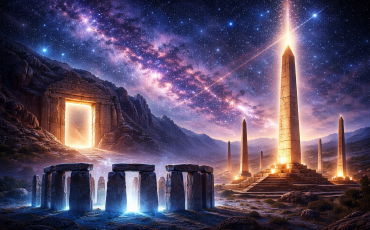
Sacred Stone Sites of the World: Where Geology, Cosmos and Humanity Meet | MINERALS-STONES®

Around the world, certain stone sites have been regarded as special for thousands of years. They represent the intersection of geology, astronomical observation, and human meaning-making.
Geology as the foundation of sacred places
Many sacred sites stand on unique geological formations, offering stability, acoustic properties, or visual dominance in the landscape.
Stonehenge: stone aligned with the Sun
Stonehenge aligns precisely with solstices, reflecting advanced understanding of solar cycles rather than mystical forces.
Machu Picchu: mountain stone and astronomy
Inca architecture integrates stone, terrain, and celestial observation into a coherent system.
Karnak: stone as cosmic order
Egyptian temples used massive stone construction to symbolize permanence and harmony with the cosmos.
Uluru: landscape and identity
Uluru’s sacred status arises from cultural connection to land, not from human construction.
Ley lines and modern interpretations
Ley lines reflect human pattern-seeking rather than scientifically verified energy networks.
Conclusion: Sacred stone sites demonstrate humanity’s ability to understand geology and astronomy—and to express that understanding symbolically.
https://minerals-stones.com/en/116-quartzcrystal-processed-natural-minerals