|
COOKIES SETTINGS |
Accept all cookies Personalise |
| Accept selected cookies |

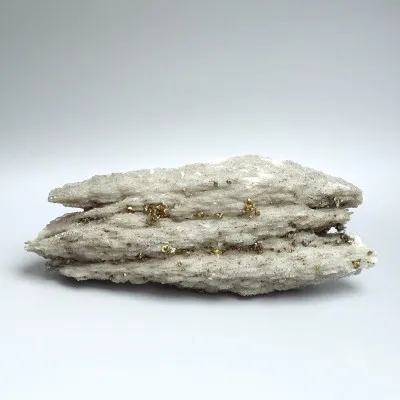
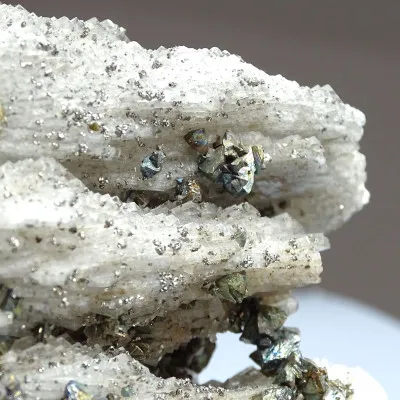
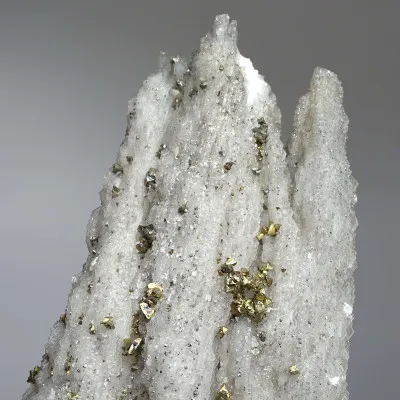
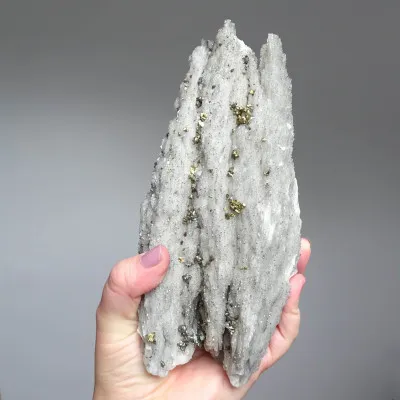
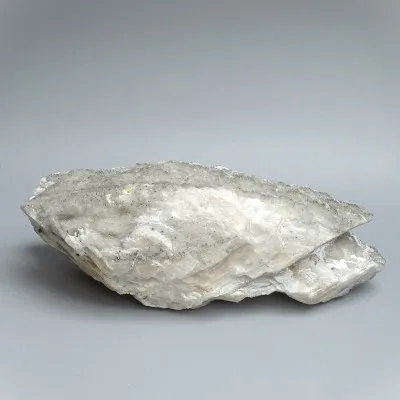
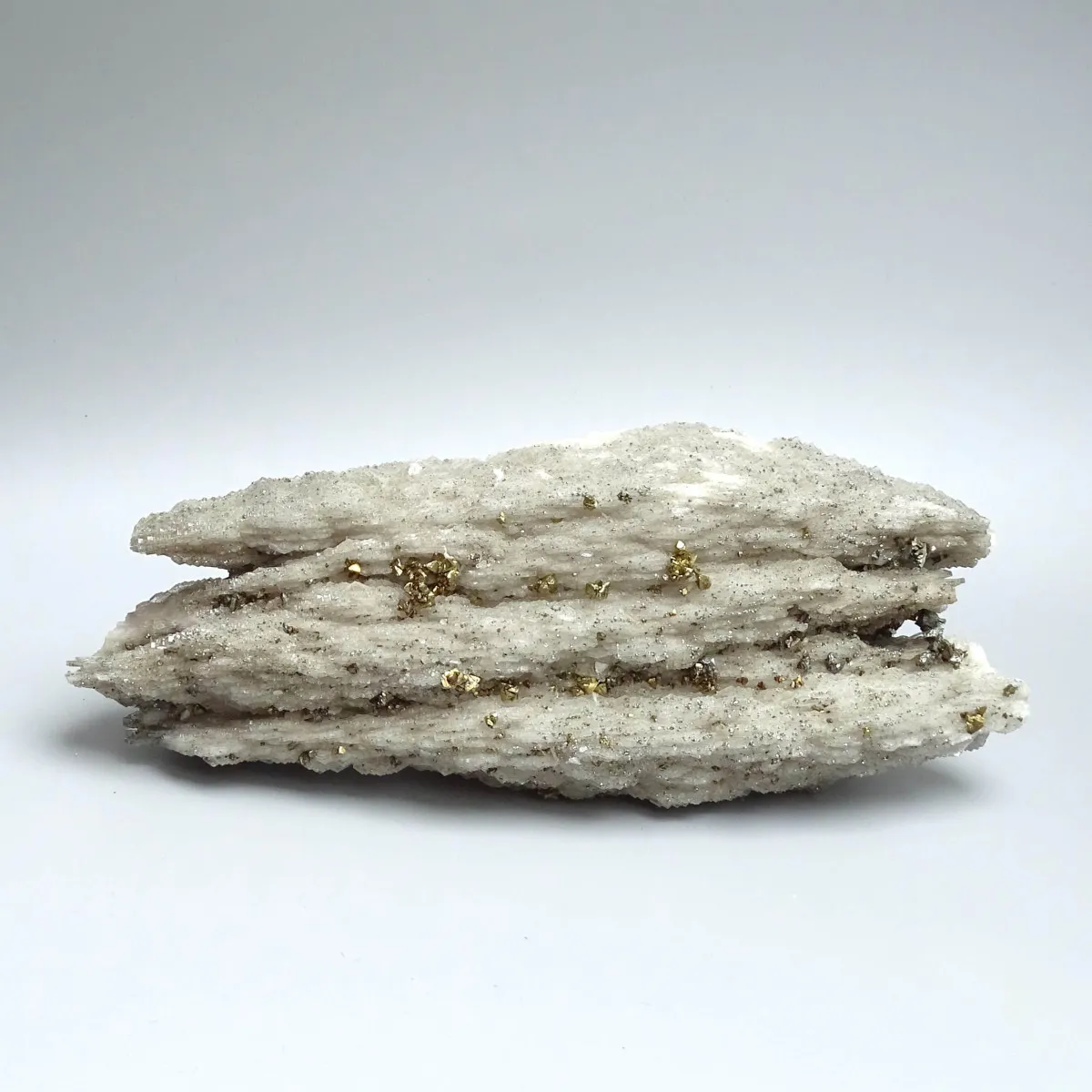
Exclusive museum barite with pyrite from Morocco – 3038 g
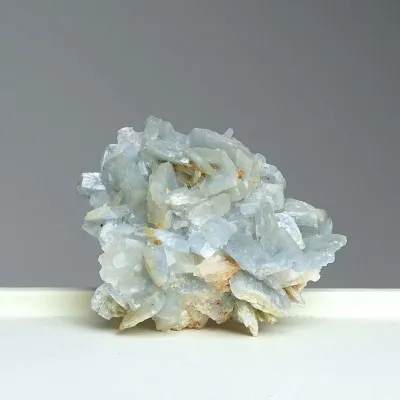
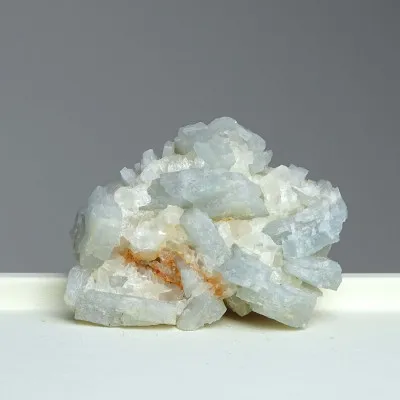
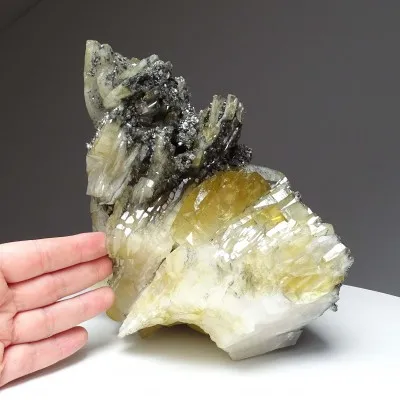
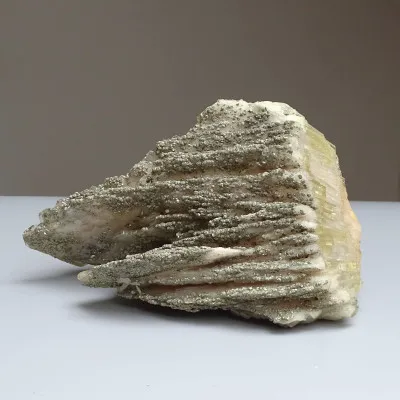
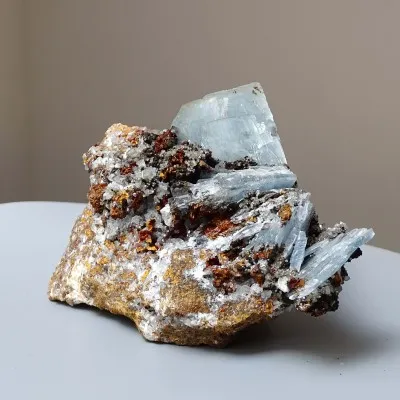
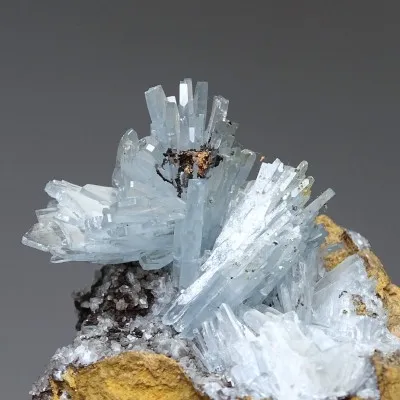
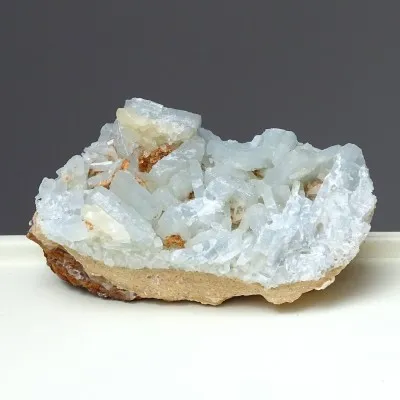
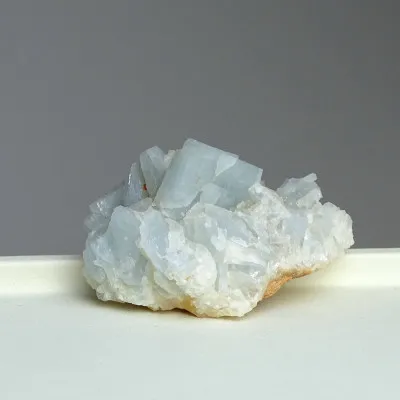
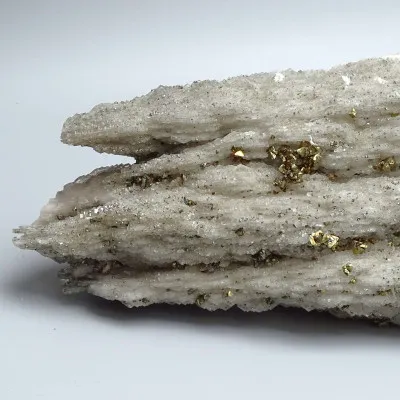
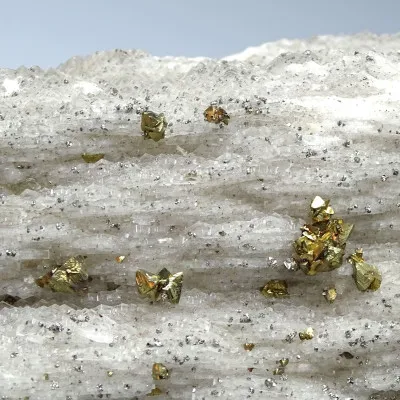
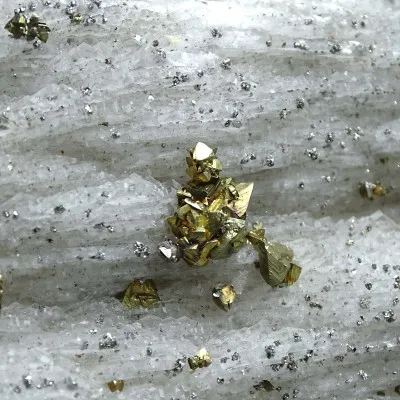
Extremely attractive museum piece of barite with pyrite from Morocco weighing 3038 g. The base is formed by significantly elongated, layered to plate-like barite crystals in whitish-gray and translucent shades. The surface is covered in places with a fine drusy crystalline coating, which gives the entire specimen a natural structure and depth.
Contrasting metallic-gold pyrite crystals stand out on the barite, which create a luxurious visual effect and beautifully highlight the shape and surface of the mineral. This particular piece looks very decorative, massive and valuable as a collector. It is suitable as a dominant mineral in a showcase, representative collection or interior.
Weight: 3038 g
Dimensions: 23.34 x 8.36 x 9.06 cm
Country of origin: Morocco, Location: Nador
You always buy the mineral shown in the photo!
MINERALS-STONES® • Barite • Morocco • Collector Minerals
Barite, also known as baryte, is a strikingly heavy mineral composed of barium sulfate. In mineral collections it is valued for its high density, tabular to lamellar crystals, vitreous to pearly luster and broad range of natural colors. Moroccan barite may appear white, cream, honey yellow, yellow, brown, gray, bluish, greenish or orange, and it is often associated with galena, cerussite, vanadinite, quartz, calcite or other hydrothermal and ore-related minerals.
Barite is chemically BaSO4, barium sulfate. Its density is usually around 4.3–4.6 g/cm³. This unusually high density is one of its most characteristic features: even a small crystal group can feel surprisingly heavy in the hand.
In Morocco, barite occurs mainly in hydrothermal veins, ore districts and cavities within rocks. Collector-quality pieces are especially known from eastern and southeastern Morocco, including broader regions such as Midelt–Mibladen, Tafilalet–Erfoud–Taouz, Oumjrane, Nador and other ore-bearing or vein-type localities. The exact locality of a specific specimen should only be stated according to the available supplier documentation.
Note: the table is horizontally scrollable on mobile devices so it remains readable and does not collapse into narrow columns.
| Property | Data | Collector significance |
|---|---|---|
| Name | Barite, baryte | The name is related to the Greek word “barys” meaning heavy, referring to the mineral’s high density. |
| Chemical composition | BaSO4 | Barium sulfate; the high barium content explains the unusually heavy feel of the specimen. |
| Crystal system | Orthorhombic | Typical forms include tabular, platy, bladed and rosette-like crystals. |
| Mohs hardness | Approximately 3–3.5 | Barite is relatively soft, scratches easily and requires careful handling. |
| Density | Approximately 4.3–4.6 g/cm³ | A very heavy mineral; this is one of the best practical clues for identification. |
| Luster | Vitreous, pearly to dull depending on the surface | Well-preserved crystal faces may show a very attractive luster. |
| Cleavage | Good to perfect in several directions | Barite may chip if struck; it should not be stored loosely together with harder minerals. |
| Streak | White | Streak may help basic identification, but it is a destructive test and unsuitable for attractive specimens. |
| Transparency | Transparent, translucent to opaque | Clear, well-formed crystals are especially attractive; massive barite is more decorative or geological in character. |
| Typical Moroccan associations | Galena, cerussite, vanadinite, quartz, calcite, fluorite and other ore minerals depending on locality | Mineral associations can significantly increase the aesthetic and collector value of a specimen. |
Morocco is known for a wide variety of ore-related and hydrothermal mineral localities. In such deposits, barite may occur as a vein mineral, an associated mineral or locally as an important major mineral. Moroccan barite is often linked with regions where lead, zinc, vanadium, copper and other ore minerals are found.
Collector-known broader regions include Midelt and Mibladen, famous also for vanadinite associations, as well as Tafilalet, Erfoud and Taouz, parts of the Oumjrane area, Nador and other Moroccan vein and ore districts. The exact locality of a particular specimen depends on the documentation available for that piece.
In product descriptions it is important to distinguish between “Morocco”, “Midelt region”, “Mibladen”, “Tafilalet”, “Taouz” or a specific mine. A precise locality should only be stated when it is documented. For collectors, reliable locality information has significant value.
Barite commonly forms from hydrothermal solutions. These are warm mineral-rich fluids that move through cracks, fractures and cavities in rocks. When barium and sulfate meet under suitable chemical conditions, barium sulfate can precipitate and form barite crystals.
In ore districts, barite often accompanies lead, zinc, copper or vanadium minerals. This is why Moroccan specimens may show aesthetically strong combinations of barite with contrasting minerals such as orange-red vanadinite, metallic gray galena, pale cerussite or quartz.
The growth environment influences color, transparency, crystal size and crystal habit. Slow and stable growth inside a cavity may create better-developed crystals, while rapid filling of veins may produce more massive or granular aggregates.
Pure barite may be colorless to white. In nature, however, it often contains minor impurities, inclusions, coatings or growth-related irregularities that produce cream, honey yellow, yellow, brown, gray, bluish, greenish or orange tones.
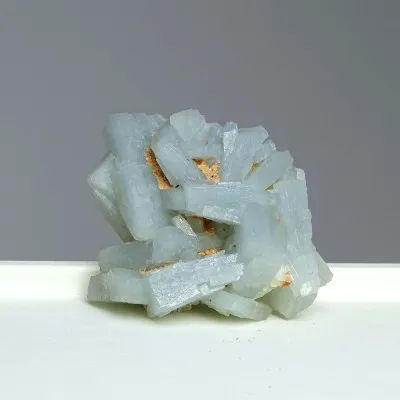
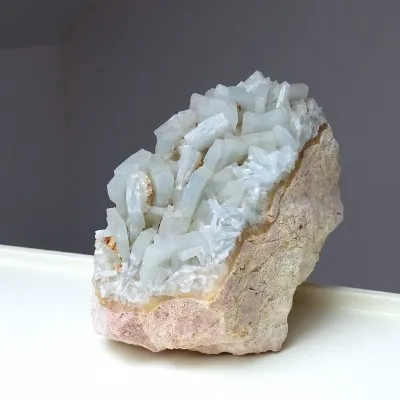
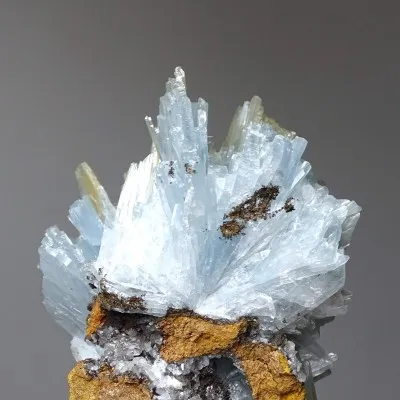
Moroccan barites are popular precisely because of this color variety. Some specimens look bright and delicate, while others show warm honey, caramel or yellow tones, smoky brown shades, gray tabular crystals or strong contrast created by intergrowths with other minerals.
| Barite color | Possible appearance | Collector significance |
|---|---|---|
| White to cream | Light-colored plates, druses or more massive aggregates. | A clean appearance that clearly shows the crystal form. |
| Honey yellow to yellow | Translucent crystals with warm yellow, golden or caramel tones. | Very attractive for decorative and collector-grade pieces. |
| Brown to smoky | Darker crystals influenced by inclusions, coatings or iron-rich components. | Interesting texture and good contrast with pale or metallic gray associated minerals. |
| Gray to colorless | Clear, grayish or glassy tabular crystals. | Crystal form, luster and internal growth structures are clearly visible. |
| Bluish to blue-gray | Less common and often subtle shades that depend strongly on lighting. | Collector-interesting when the color is natural and the locality is plausible. |
| Orange to reddish | Warm tones caused by inclusions, coatings or associated minerals. | Striking appearance, suitable for aesthetic specimens and contrasting mineral associations. |
Barite is a popular collector mineral because it can form many different crystal habits. It may occur as tabular crystals, bladed aggregates, fan-like structures, druses, rosettes or compact vein fillings. In Moroccan specimens, the association with other minerals is often especially attractive.
The most valuable pieces are not automatically the largest. Collector value is increased by preservation, crystal development, aesthetic composition, contrast with associated minerals, luster, transparency, color, documented locality and the overall balance of the specimen.
Because barite has relatively low hardness and good cleavage, fine crystal edges may chip. The specimen should therefore be stored separately from harder minerals, not kept loosely in a shared box and protected from impacts.
Barite should not be cleaned with acids, aggressive chemicals, ultrasonic cleaners or high-pressure water unless the specimen has been professionally assessed. It is a relatively soft and cleavable mineral that may scratch, chip or lose delicate crystal edges if handled carelessly.
Store the specimen separately, ideally in a box or display case where it does not touch harder minerals. When handling it, hold it by a stable base rather than by thin tabular crystals or fragile projections.
For normal maintenance, a soft dry brush, a soft cloth and gentle dust removal are usually sufficient. With valuable specimens, it is often better not to clean them at all than to risk irreversible damage.
Although barite can be beautiful, transparent and color-interesting, it is not normally used as a stone for rings or jewelry intended for everyday wear because of its low hardness, cleavage and relative fragility.
Its main value is collector, decorative and mineralogical. It is best presented as an individual specimen in a display cabinet, in a mineralogical study collection or as an example of a high-density hydrothermal mineral.
Reality: Barite is noticeably heavy for its size because of the high density of barium sulfate.
Reality: It may be colorless, white, cream, yellow, honey-colored, brown, gray, bluish or orange.
Reality: Morocco has several barite and ore districts. A precise locality should only be used when documented.
Reality: With hardness around 3–3.5 and distinct cleavage, barite is better suited for collections than for heavily used jewelry.
Barite is a barium sulfate mineral with the formula BaSO4. It is known for its high density, relatively low hardness, tabular crystals and broad range of colors.
Barite contains barium, a heavy chemical element. This gives it a noticeably higher density than many other minerals of similar size.
Barite occurs in Morocco in several hydrothermal and ore-bearing districts, including broader areas such as Midelt–Mibladen, Tafilalet–Erfoud–Taouz, Oumjrane, Nador and other vein-type localities. The exact locality of a specimen depends on documented information.
Barite may be colorless, white, cream, honey yellow, yellow, brown, gray, bluish, greenish or orange. Color is influenced by impurities, inclusions, coatings and growth conditions.
Barite can be transparent and aesthetically attractive, but because of its low hardness and cleavage it is not commonly used as a gemstone for everyday jewelry. It is mainly a collector mineral.
Barite should be stored separately and protected from impact, scratching, pressure and aggressive cleaning. Delicate crystals are best cleaned only with a dry soft brush or cloth.
The MINERALS-STONES® project specializes in natural minerals, crystals, druses, tektites, gemstone materials and investment gemstones. We select minerals according to origin, mineralogical character, aesthetic quality, preservation and the real appearance of each individual specimen.
For individually listed minerals, the customer usually buys the exact specimen shown in the photographs. Barite from Morocco is especially interesting as a collector mineral with high density, beautiful crystal forms, natural color variety and a connection to rich North African ore and hydrothermal localities.
Exclusive museum barite with pyrite from Morocco – 3038 g
Extremely attractive museum piece of barite with pyrite from Morocco weighing 3038 g. The base is formed by significantly elongated, layered to plate-like barite crystals in whitish-gray and translucent shades. The surface is covered in places with a fine drusy crystalline coating, which gives the entire specimen a natural structure and depth.
Contrasting metallic-gold pyrite crystals stand out on the barite, which create a luxurious visual effect and beautifully highlight the shape and surface of the mineral. This particular piece looks very decorative, massive and valuable as a collector. It is suitable as a dominant mineral in a showcase, representative collection or interior.
Weight: 3038 g
Dimensions: 23.34 x 8.36 x 9.06 cm
Country of origin: Morocco, Location: Nador
You always buy the mineral shown in the photo!