|
COOKIES SETTINGS |
Accept all cookies Personalise |
| Accept selected cookies |

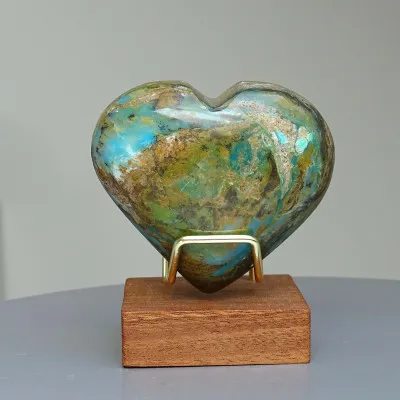
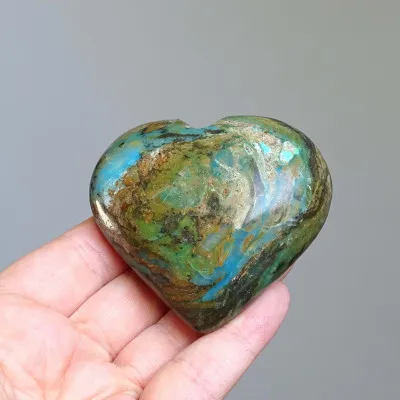
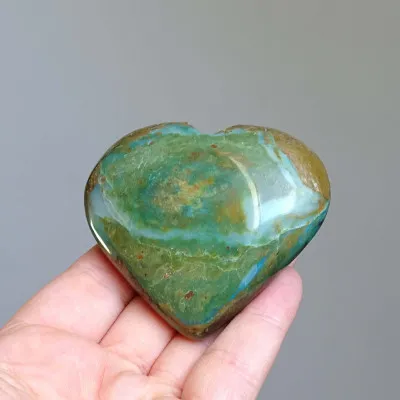
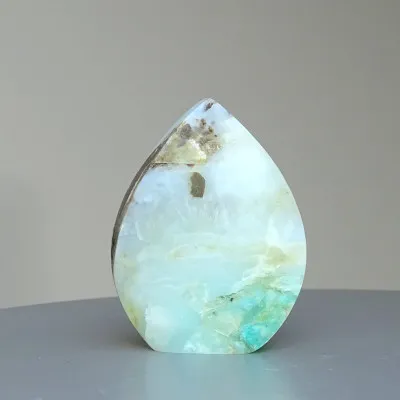
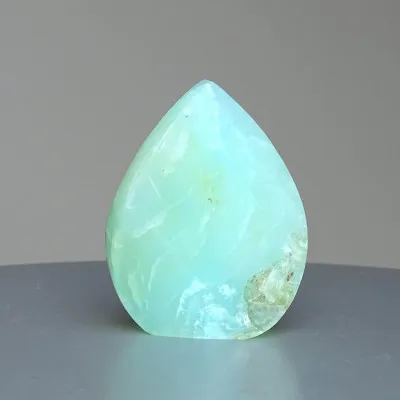
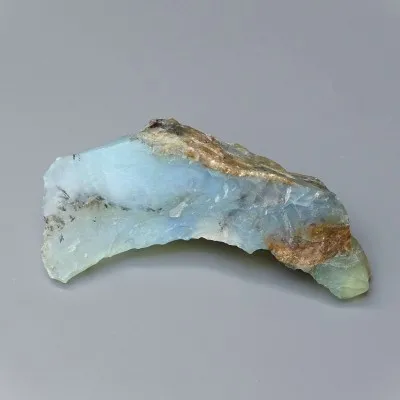
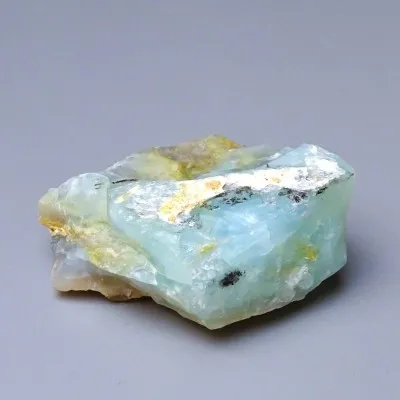
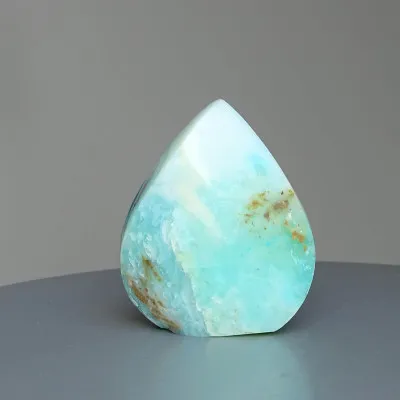
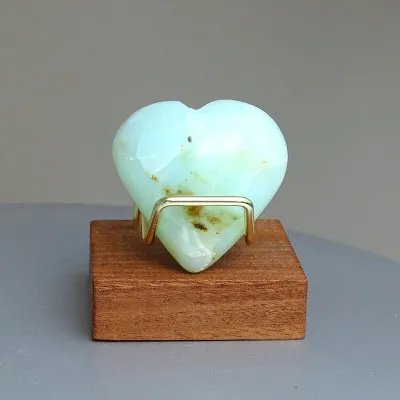
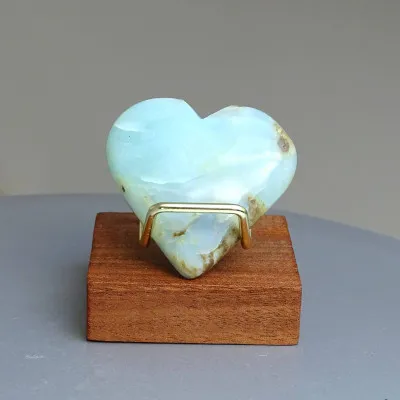
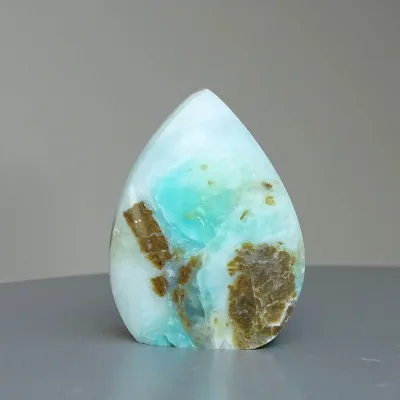
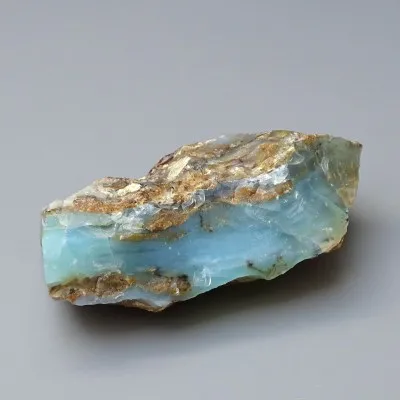
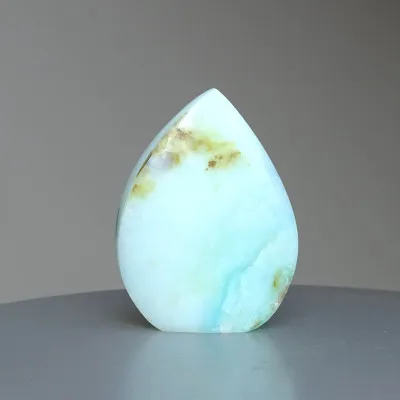
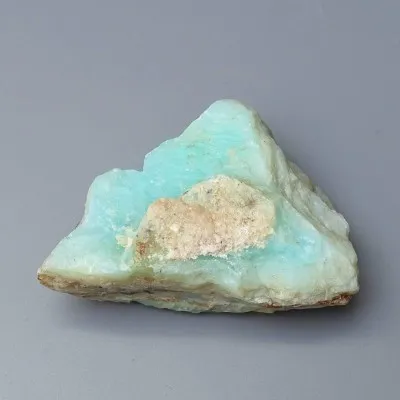
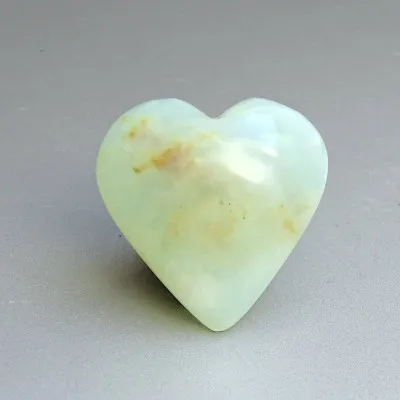
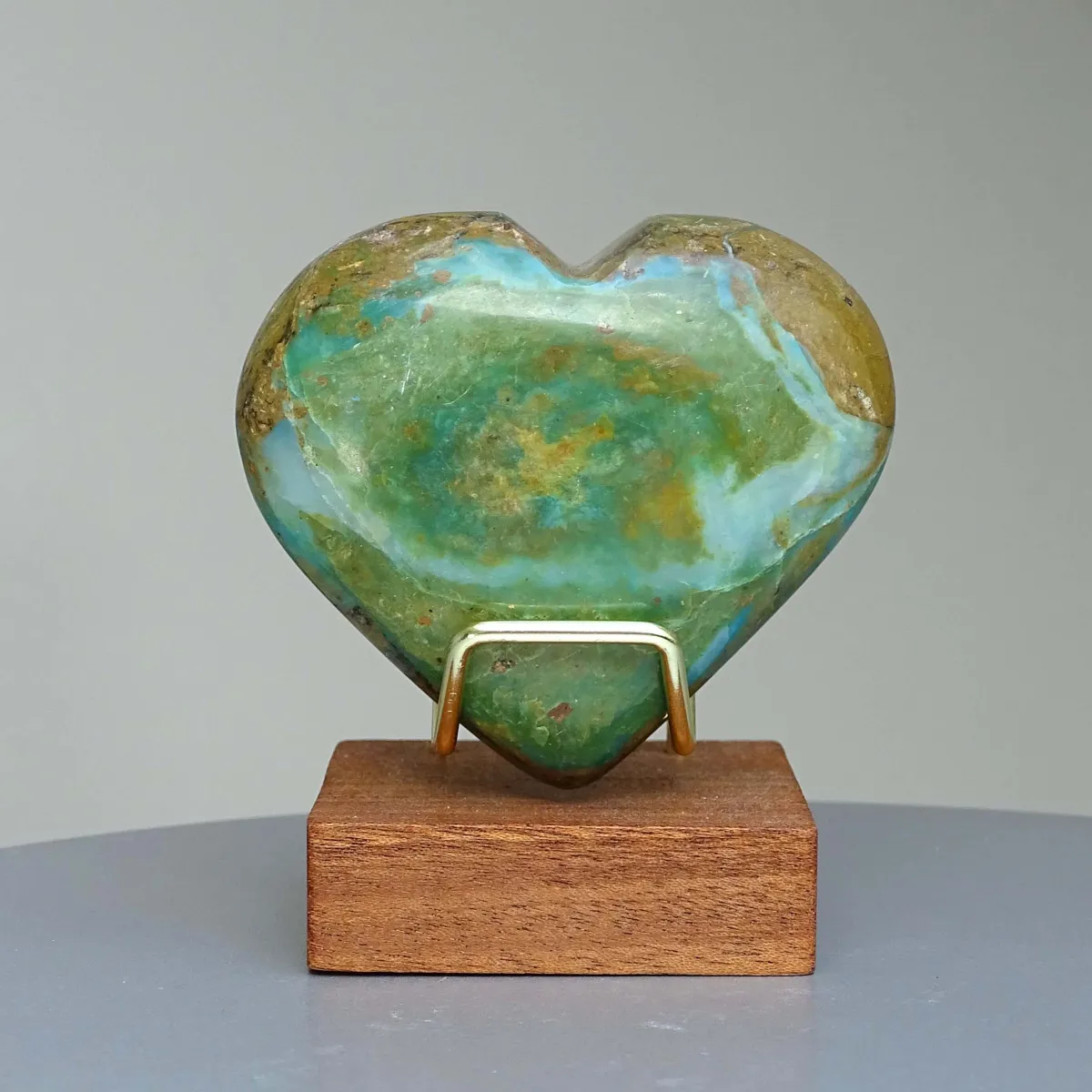
The rarer Andean natural blue opal in a polished free shape is a beautiful collector's item with a delicate turquoise blue to light milky blue color. The stone attracts attention with its calm pastel shade, waxy shine and natural pattern, in which blue, white, greenish and earthy tones of the parent rock blend. This polished piece is suitable as a collector's mineral, interior decoration, meditation stone or original gift for lovers of natural stones. Thanks to its shape and pattern, it looks aesthetic, delicate and at the same time retains the authentic character of a natural mineral.
Each piece of Andean blue opal is an original of nature — it differs in shade, pattern, translucency and proportion of rock. It is these natural differences that make each stone a unique specimen.
Warning: This is a natural stone. For this reason, slight irregularities, natural cracks, color transitions, small inclusions or parts of the original parent rock may appear on the surface. These features are not a defect, but a natural part of the authentic natural appearance of the stone.
Weight: 109 g
Dimensions: 5.92 x 6.53 x 2.75 cm
Color: light blue - light milky - blue-gray
Country of origin: Peru, Andes region
You are purchasing the mineral shown in the photo.
The wooden stand is not included in the sale!
MINERALS-STONES® • Peru • Andean Blue Opal
Natural Andean blue opal is an attractive polished stone with a soft turquoise-blue, milky blue to blue-green color. This sought-after Peruvian variety of opal stands out for its calm pastel shade, waxy to softly vitreous luster and natural host-rock pattern, which gives every piece an authentic natural character.
Andean blue opal, often also called Peruvian blue opal, belongs to the less common and aesthetically very popular varieties of opal. It is valued mainly for its gentle blue to blue-green coloration, natural pattern, pleasant waxy luster and elegant appearance without excessive visual sharpness.
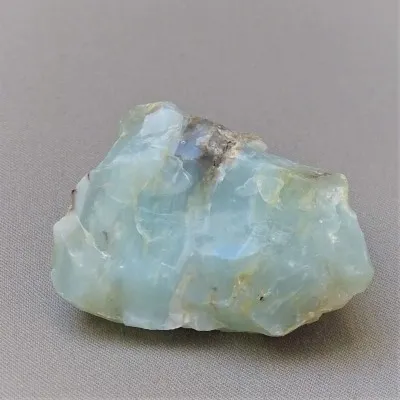
Unlike classic precious opal, this type of blue opal usually does not display a strong play-of-color. Its beauty lies primarily in its clean pastel color, natural translucency, soft optical impression and the combination of blue, turquoise, white, creamy or earthy areas. This calm color character makes Peruvian blue opal a highly decorative and collectible stone.
This polished freeform is suitable as a collector mineral, decorative natural stone for interiors, gift stone or aesthetic material for jewelry use, especially for cabochons, pendants and artisan jewelry. Each piece is an original work of nature and may differ in shade, pattern, translucency, proportion of host rock, natural veins and overall shape.
With blue Andean opal, it is important to appreciate its natural character. Earthy transitions, lighter siliceous areas, fine inclusions, natural structures and small variations in color are not defects; they are part of its identity. These features distinguish a natural piece from uniform imitations or overly processed material.
The best-known blue opals come from Peru, from areas associated with the Andes. This is why the terms Andean blue opal or Peruvian blue opal are used.
The stone attracts attention with light blue, turquoise to blue-green tones. Its appearance is usually soft, calm, natural and elegant.
Polishing enhances the color, pattern and waxy luster of the opal. The freeform shape preserves the natural irregularity and individual character of the stone.
The most famous blue opals are associated with Peru and the Andean region. The name Andean blue opal reflects this geographical and visual identity. Peruvian blue opal is valued for its delicate pastel color range, from light blue and turquoise to blue-green and milky blue shades.
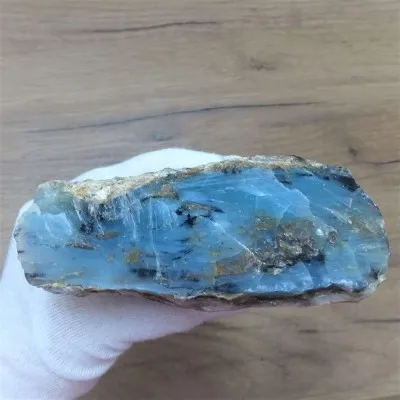
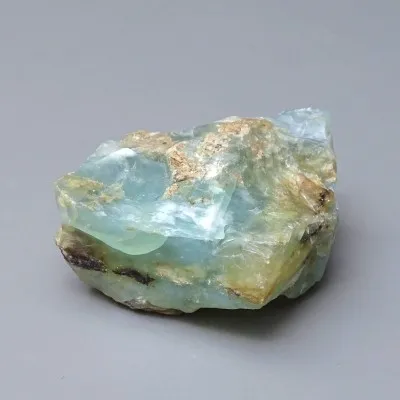
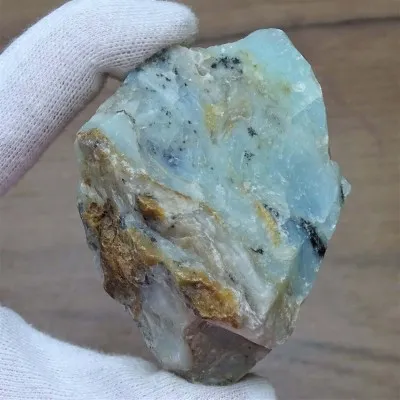
In nature, this opal occurs together with surrounding host rock. For this reason, natural pieces may contain earthy areas, brownish inclusions, white transitions, siliceous parts or cloud-like internal structures. These natural details increase the authenticity and collector character of the stone.
The locality is important not because every piece is automatically rare or expensive, but because Peruvian blue opal has a specific visual identity that is clearly different from classic precious opals with play-of-color, Australian opals, Ethiopian opals or common opal materials from other regions.
| Parameter | Information |
|---|---|
| Name | Andean blue opal, Peruvian blue opal |
| Mineral / material | Opal |
| Mineralogical classification | Mineraloid, amorphous form of hydrated silica |
| Chemical composition | Hydrated silicon dioxide – SiO2 · nH2O |
| Color | Light blue, turquoise blue, blue-green, milky blue, sometimes with white, cream or earthy areas |
| Luster | Waxy to softly vitreous |
| Transparency | Usually opaque to slightly translucent |
| Hardness | Approximately 5.5–6.5 on the Mohs scale |
| Structure | Amorphous, non-crystalline, with variable water content |
| Locality | Andean region, Peru |
| Processing | Polished natural stone in freeform shape |
| Use | Collection, decoration, meditation object, jewelry material, cabochons, gift stone |
Opal is not a classic crystalline mineral, but an amorphous mineraloid composed of hydrated silicon dioxide. Its basic composition is written as SiO2 · nH2O, meaning silica with a variable amount of water. This inner structure gives opal its characteristic appearance, soft luster and natural pattern.
The blue to blue-green tones of Andean opal may be associated with fine mineral impurities, natural inclusions and the specific composition of the host material. In these stones, parts of the original host rock, earthy transitions, light siliceous areas and natural veins are common.
These features are not flaws. On the contrary, they confirm the natural origin of the stone and give every piece its individual visual expression. In polished freeforms, the contrast between the calm blue color and the natural host-rock structure can be especially attractive.
Blue opal from Peru is not valued in the same way as precious opal with strong play-of-color. Its value is based primarily on the beauty of its natural pastel color, compactness, quality of polish, pleasant shape, purity of the blue tone and overall aesthetic impression.
More attractive pieces usually show a clear turquoise-blue to milky blue color, good polish, compact structure, pleasing shape and interesting yet not overly dominant host-rock pattern. Stones with a harmonious balance of color and natural texture are especially attractive for collectors and jewelry designers.
Because this is a natural material, every piece is unique. Differences in shade, translucency, inclusions, veins and earthy parts are normal and often desirable. They help the stone retain its authentic character and distinguish it from artificially uniform decorative stones.
Polished Andean blue opal is suitable for mineral collections, natural decoration and as an aesthetic stone for interiors. Its calm blue color works well with wood, light minerals, silver, natural fabrics and minimalistic display settings.
Thanks to its color and surface, Peruvian blue opal can also be interesting as a material for jewelry cabochons, pendants, earrings or handmade designer jewelry. It is particularly suitable for jewelry designs where the aim is not sharp brilliance, but a soft, natural and elegant visual impression.
Opal should be treated with care in jewelry. It has lower hardness than many classic gemstones and contains water in its structure. For this reason, it is best suited for pendants, earrings, brooches or cabochons in protected settings rather than highly exposed everyday rings.
Opal is more sensitive than many crystalline minerals. It is advisable to protect it from impacts, strong pressure, aggressive chemicals, ultrasonic cleaning, sudden temperature changes, prolonged direct sunlight and excessive drying. Because opal contains water in its structure, it should not be exposed to extreme heat or harsh drying conditions.
For cleaning, use only a soft cloth, or slightly lukewarm water without aggressive detergents if necessary. Do not use acids, alcohol, strong cleaning agents or ultrasonic cleaners. Store the stone separately from harder minerals and gemstones that could scratch its polished surface.
Andean blue opal is a natural variety of opal from Peru, valued for its delicate turquoise-blue, milky blue to blue-green color, waxy luster and natural host-rock pattern.
Yes, these names are often used for the same type of blue opal from Peru, especially from areas associated with the Andes.
Usually not. Unlike classic precious opal, Peruvian blue opal is valued mainly for its calm pastel color, waxy luster and natural structure rather than strong play-of-color.
Opal is composed of hydrated silicon dioxide with variable water content. Its formula is commonly written as SiO2 · nH2O.
It is a less common and sought-after variety of opal. Pieces with attractive color, compact structure, good polish and pleasing natural pattern are especially desirable.
Yes, especially for cabochons, pendants, earrings and protected settings. Because opal is softer and more sensitive than many gemstones, it should be protected from impacts, chemicals and excessive drying.
Clean it with a soft cloth and protect it from impacts, sudden temperature changes, prolonged direct sunlight, aggressive chemicals and ultrasonic cleaning.
No. In natural Andean opal, veins, transitions, host rock and fine inclusions are common parts of the natural appearance and individuality of each piece.
You always purchase the exact piece shown in the photograph. MINERALS-STONES® offers natural minerals, crystals, gemstones, collector pieces and jewelry stones with a focus on origin, real photographs, expert description and transparent information.
The rarer Andean natural blue opal in a polished free shape is a beautiful collector's item with a delicate turquoise blue to light milky blue color. The stone attracts attention with its calm pastel shade, waxy shine and natural pattern, in which blue, white, greenish and earthy tones of the parent rock blend. This polished piece is suitable as a collector's mineral, interior decoration, meditation stone or original gift for lovers of natural stones. Thanks to its shape and pattern, it looks aesthetic, delicate and at the same time retains the authentic character of a natural mineral.
Each piece of Andean blue opal is an original of nature — it differs in shade, pattern, translucency and proportion of rock. It is these natural differences that make each stone a unique specimen.
Warning: This is a natural stone. For this reason, slight irregularities, natural cracks, color transitions, small inclusions or parts of the original parent rock may appear on the surface. These features are not a defect, but a natural part of the authentic natural appearance of the stone.
Weight: 109 g
Dimensions: 5.92 x 6.53 x 2.75 cm
Color: light blue - light milky - blue-gray
Country of origin: Peru, Andes region
You are purchasing the mineral shown in the photo.
The wooden stand is not included in the sale!