
Sound & Crystals: Cymatics, Resonance, and Myths vs. Reality | MINERALS-STONES®
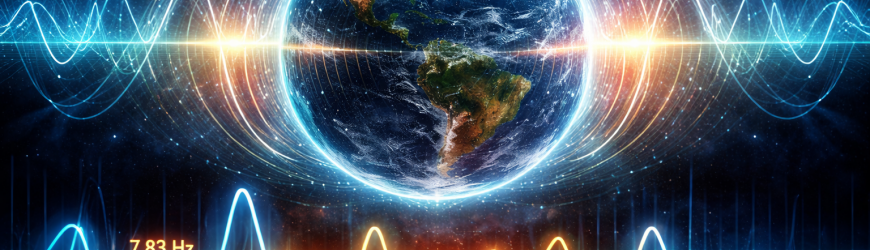
Sound, Vibration and Crystals: Cymatics, Resonance and the Acoustics of Ancient Spaces
What if sound is not only something we hear, but also something that can organize matter and make geometry visible? Physics and acoustics show that vibrations and frequencies are real, measurable phenomena—capable of influencing form, structure, and perception. This is where a fascinating connection appears: sound – crystals – resonance – human experience.
Everything vibrates: frequency as energy and pattern
Sound is a mechanical wave traveling through a medium. It:
- carries energy,
- has measurable parameters (frequency, amplitude, phase),
- and can be understood as a carrier of structured patterns.
Cymatics: when sound creates form
Cymatics makes the relationship between sound and shape visible. When fine particles (sand, salt) are placed on a vibrating plate, they arrange themselves into stable, symmetric patterns at specific frequencies.
How it works
- Sprinkle fine particles on a plate.
- Drive the plate with a single frequency.
- Particles accumulate along nodal lines, forming geometric figures.
The patterns often look “mandala-like,” yet the mechanism is physical: particles migrate toward regions of minimal motion. Sound becomes a practical “architect” of form.
Crystals as stable structures for vibration
Crystals are not random matter—they have a repeating crystal lattice. This stability helps explain why certain crystals (such as quartz) are used in technology as resonant elements. That does not mean “healing”—it means measurable physical behavior related to structure and resonance.
Sound + crystal: the resonance principle
When sound acts on a material, it induces mechanical vibration. If the driving frequency approaches a system’s natural frequency, the response can become stronger—this is resonance. Practically, this influences:
- how sound behaves in a room (emphasized frequency bands),
- how materials vibrate (damping vs. resonance),
- how people perceive atmosphere (calm, focus, tension).
Biology and frequency: the body as a sensitive system
The human body is full of rhythms—breathing, heartbeat, neural signaling, and tissue mechanics. Bio- and mechanobiology describe that cells and tissues can respond to mechanical stimuli. A careful boundary matters:
- Living structures can respond to mechanical vibration.
- Specific medical claims (“this frequency cures X”) are not credible without clinical evidence.
It is therefore more responsible to speak about harmonizing environments and perception rather than medical outcomes.
Myths, legends, and the acoustic “memory” of ancient cultures
Across cultures, sound and space were often used intentionally—from ritual chants to architecture that behaves like an acoustic instrument. Here it helps to separate myth as inspiration from measurable acoustics.
Atlantis: crystal chambers as a symbol
Atlantis (known from ancient sources) has been reinterpreted in modern storytelling with themes of crystals and sound-based chambers. Scientifically, this remains unverified myth. As a symbol, however, it points to a real principle: geometry, material, and sound can interact.
Archaeoacoustics: measurable effects in ancient rooms
Some megalithic sites and chambered structures exhibit notable acoustic behavior (resonance, echo, emphasized low-frequency response). Early megalithic regions in Turkey are often discussed in this context (e.g., Göbekli Tepe). The responsible framing is: acoustics can be measured; interpretation of purpose remains an open research question.
Myths vs. reality
❌ Myths
- “A specific frequency reliably cures a specific disease.”
- “Crystals are automatically medical devices.”
- “Atlantis is historically proven sound/crystal technology.”
✅ Reality
- Sound can create visible patterns (cymatics) and influence perception.
- Crystals have stable structures; some serve as resonators in technology.
- Acoustic behavior of certain ancient spaces is measurable; purpose is interpretive.
- Resonance, harmonization, and experience are reasonable terms—medical promises are not.
Conclusion: between measurement and fascination
Cymatics, resonance, crystal structure, and room acoustics connect physics with a theme that has fascinated humanity for millennia. The most compelling place to stand is where we remain precise—and still allow the fascination: sound as form, frequency as order, crystal as structure.
https://minerals-stones.com/en/129-lemurian-crystal-natural-and-collectible-quartz-crystals